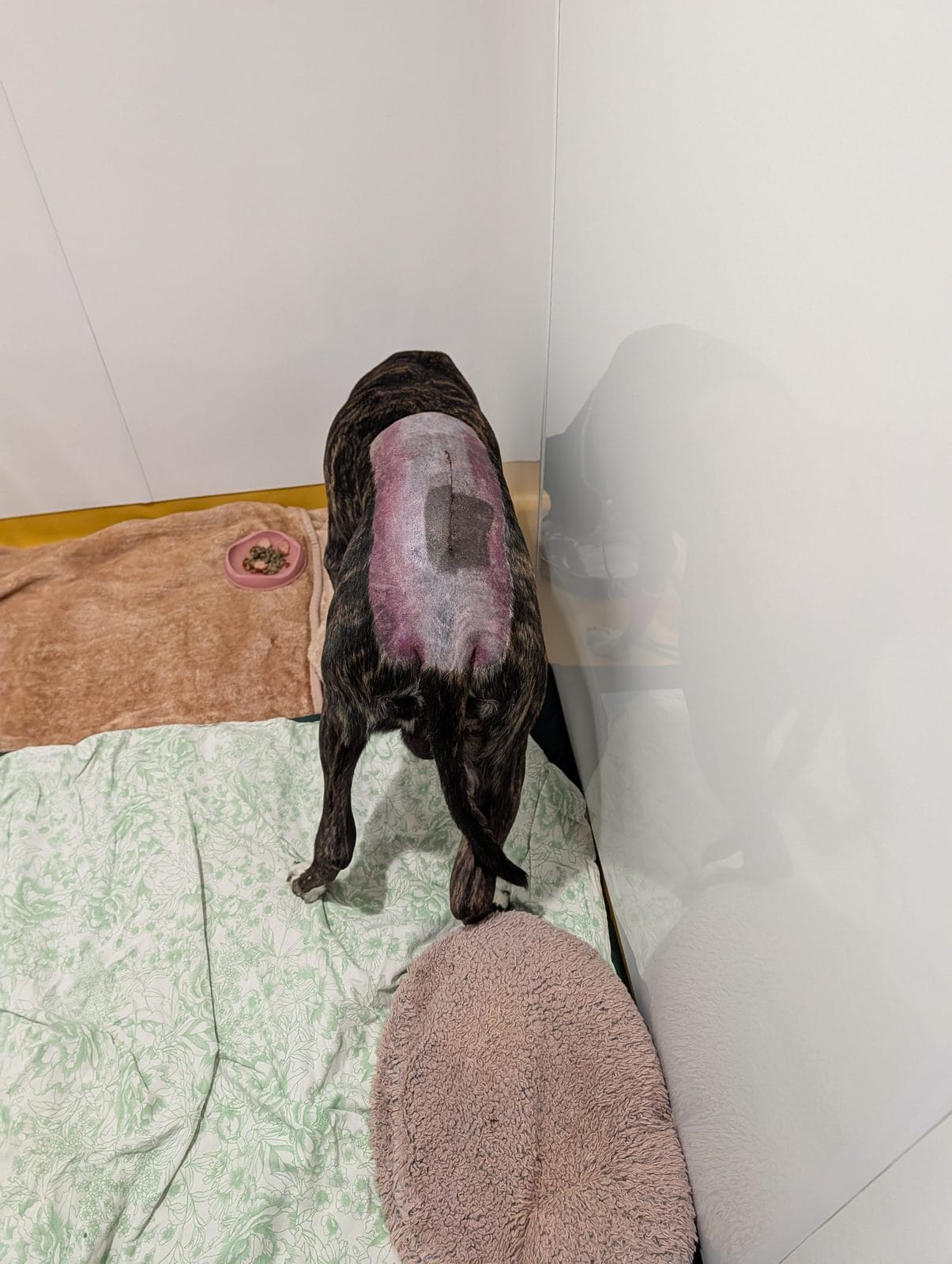
Amos had spinal surgery at Pride Veterinary Referrals on 11 June 2026. He went back twice, in June and in July, and each time it was within a day of a course of antibiotics that Pride had given or prescribed running out. Four days after his July discharge he spent six days at another practice. A week after that, a third hospital diagnosed severe discospondylitis, an infection of the spine. Four months, one formal complaint, one subject access request and many emails later, I’m still waiting on records and answers.
The consent form I filled out on 10 June 2026, in Pride’s reception, on a tablet handed to me by an intern, said the following: “Greyhounds have been shown to have an increased risk of bleeding after operations. The risk of this may be reduced by giving Tranexamic Acid 500mg tablets every 8 hours for 3 days at a cost of £6.62.”
I hadn’t heard of tranexamic acid before, there was no one to ask about it, and not enough time to research it myself. So I ticked yes.
June 10
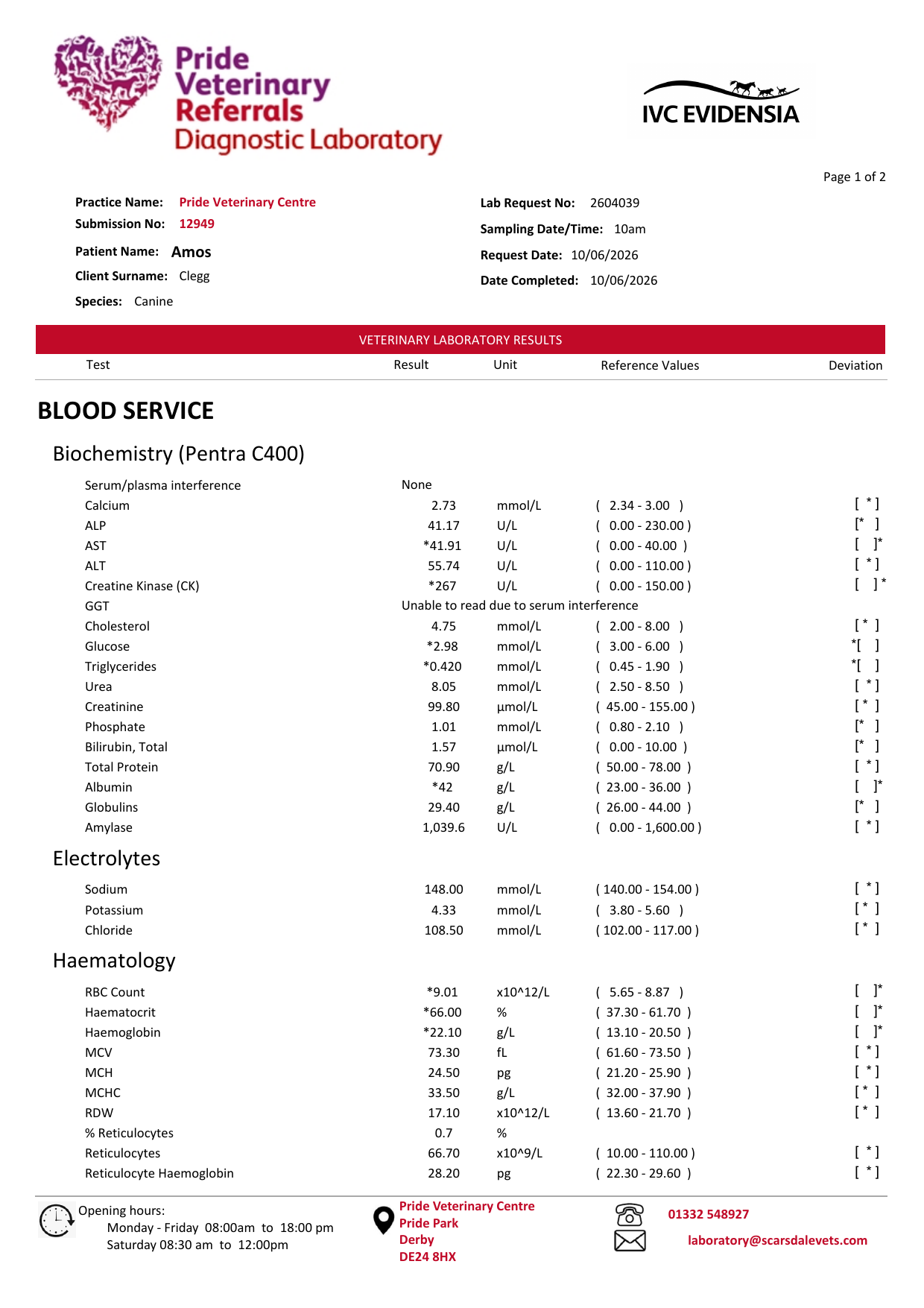
His bloods on 10 June, the day before surgery, give the baseline.
- Haematocrit 66: the share of his blood that is red cells
- Haemoglobin 22.1: the oxygen-carrying protein inside those cells
- Red cell count 9.01, in trillions per litre.
- Albumin 42: the main protein in the liquid part of the blood, which among other things keeps fluid inside the vessels rather than leaking into the tissues.
Sighthounds run a high haematocrit. It’s one of the features of the type, along with thin skin, more muscle mass and almost no fat: a Greyhound’s blood is a bigger fraction red cells than any other dog’s, because red cells carry oxygen and the breed was built to sprint.
If you remember blood doping from athletics or cycling, that was athletes injecting a hormone or their own stored blood to push their haematocrit up a few points for a race. More red blood cells, more oxygen delivered to the muscles = better performance.
June 11
The day of surgery. "No significant complications".

June 12
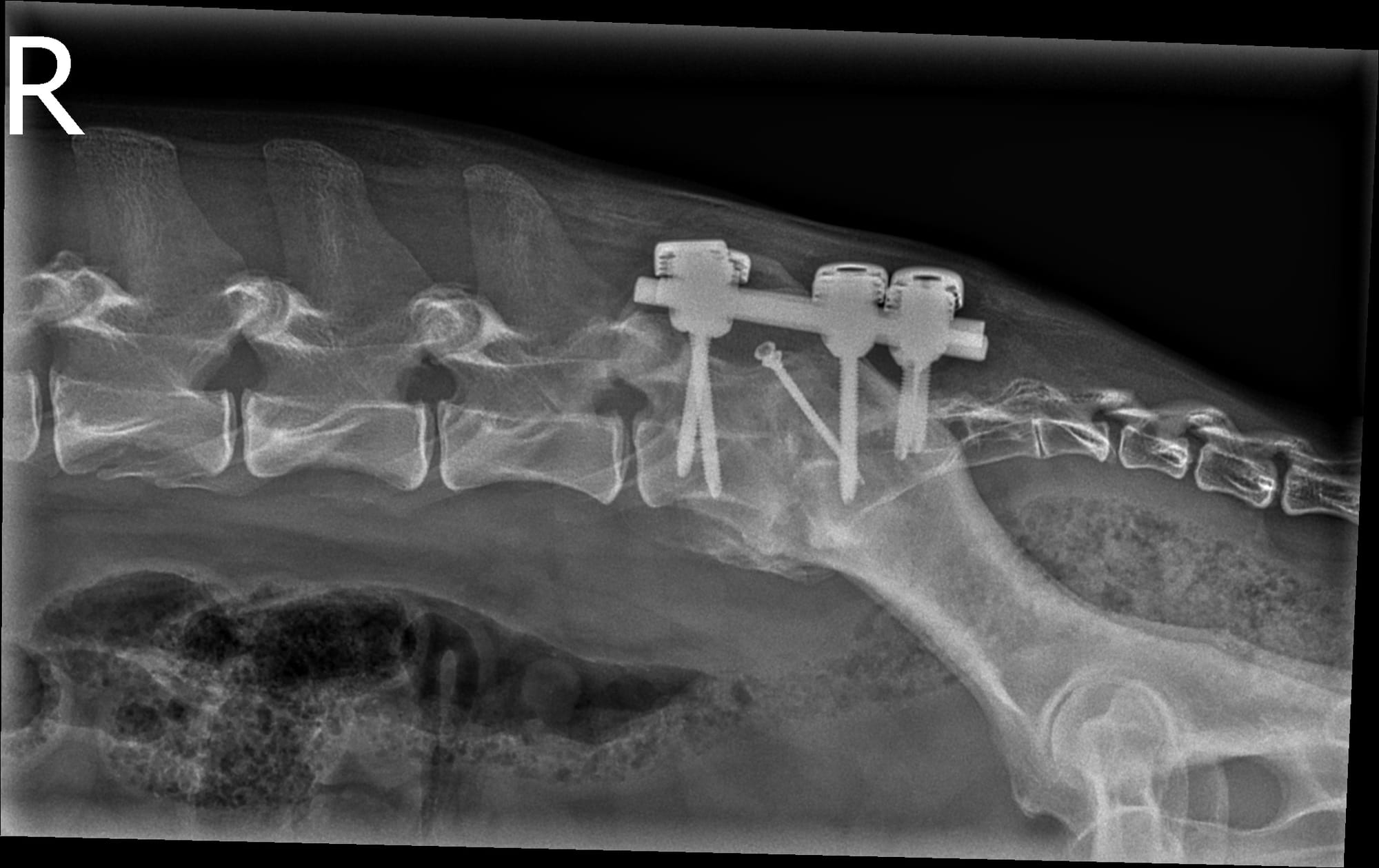
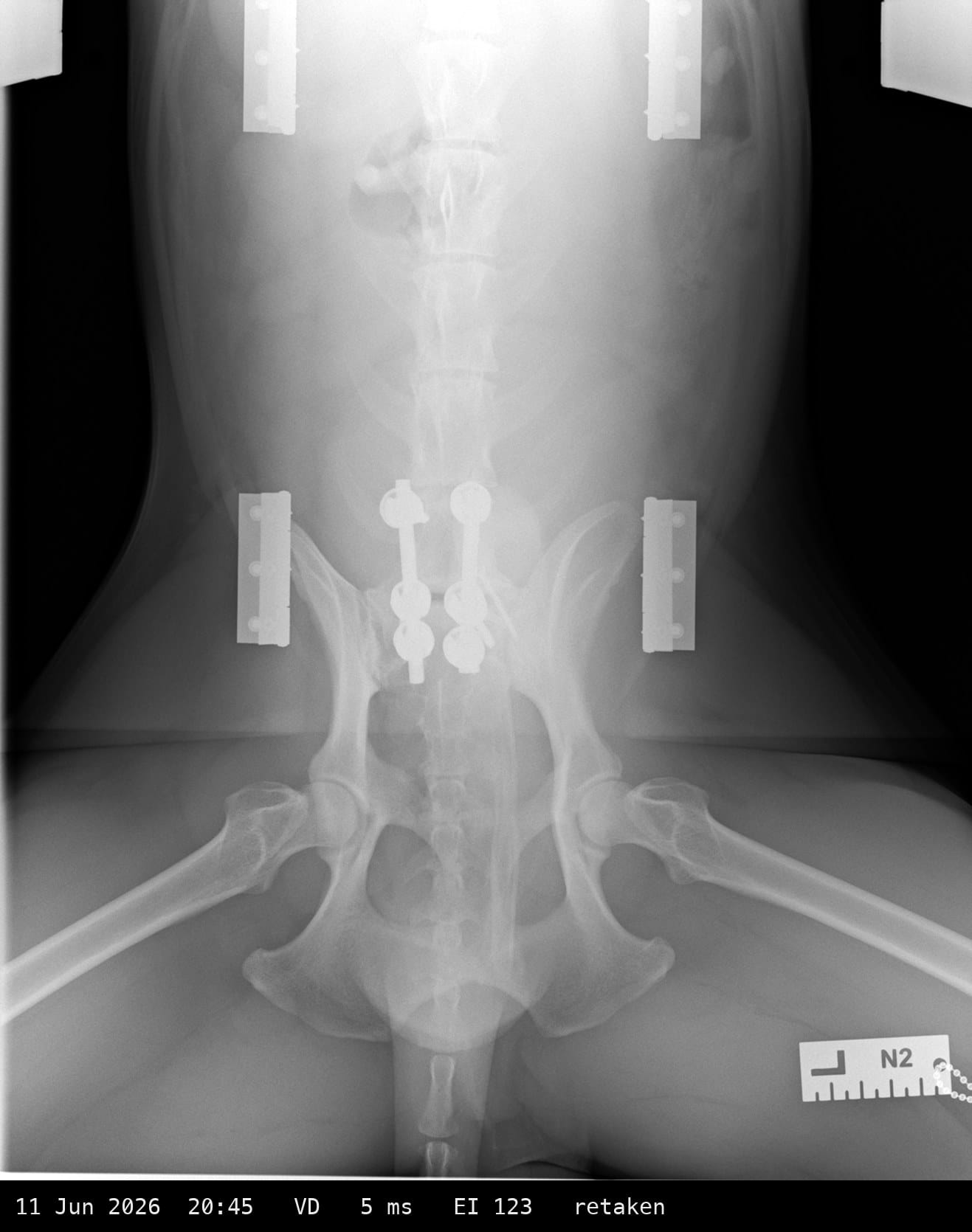
Post-operative CT. I'll talk about this a bit more in another post.

June 13

Human endurance athletes have what cardiologists call athletic heart: a bigger, stronger heart that moves more blood per beat, so at rest it beats slowly, often in the 40s and 50s, lower still at the elite end. The famous example is the Spanish cyclist Miguel Indurain, whose resting heart rate was reported at 28 beats a minute in his Tour-winning years.
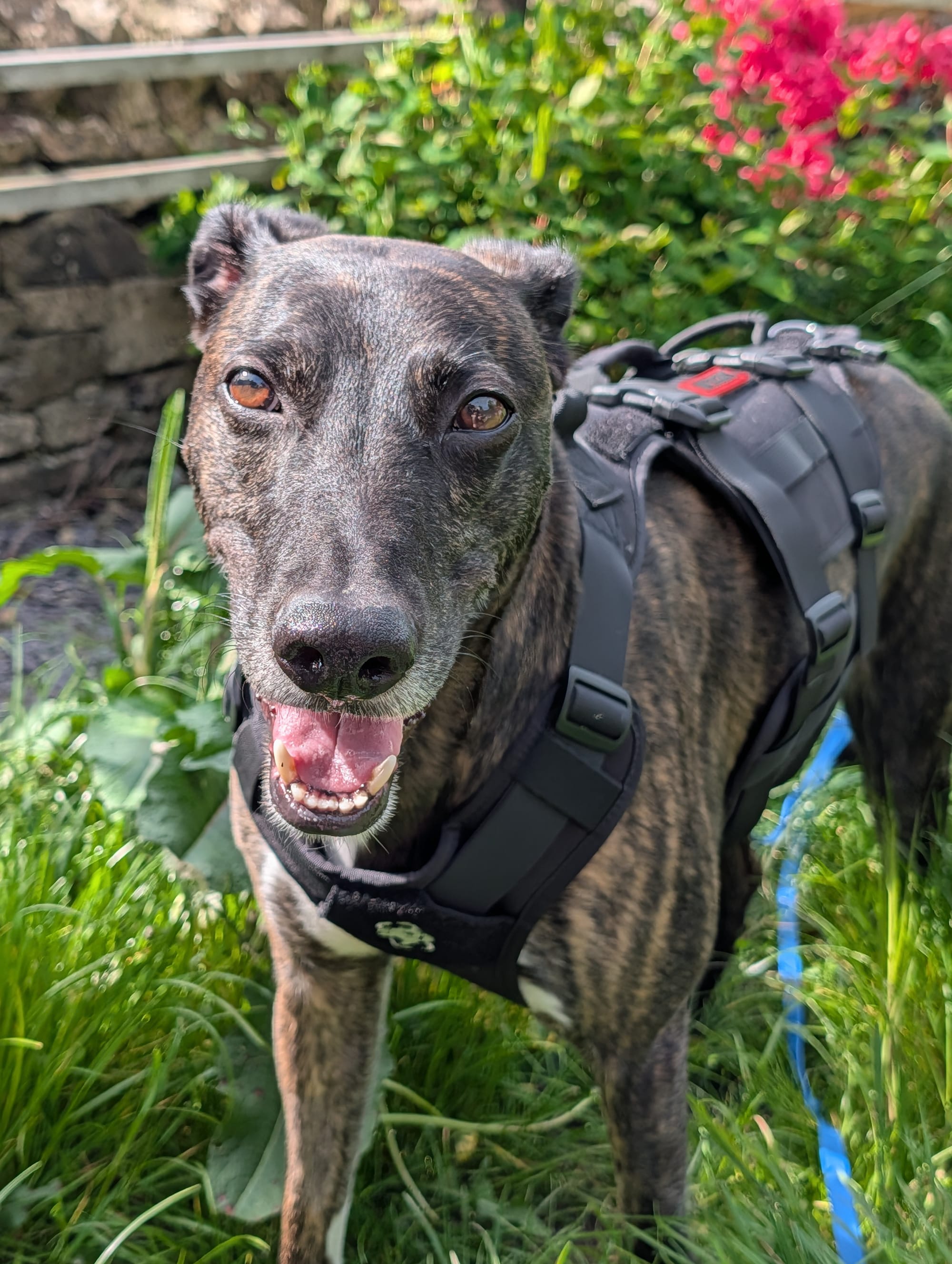
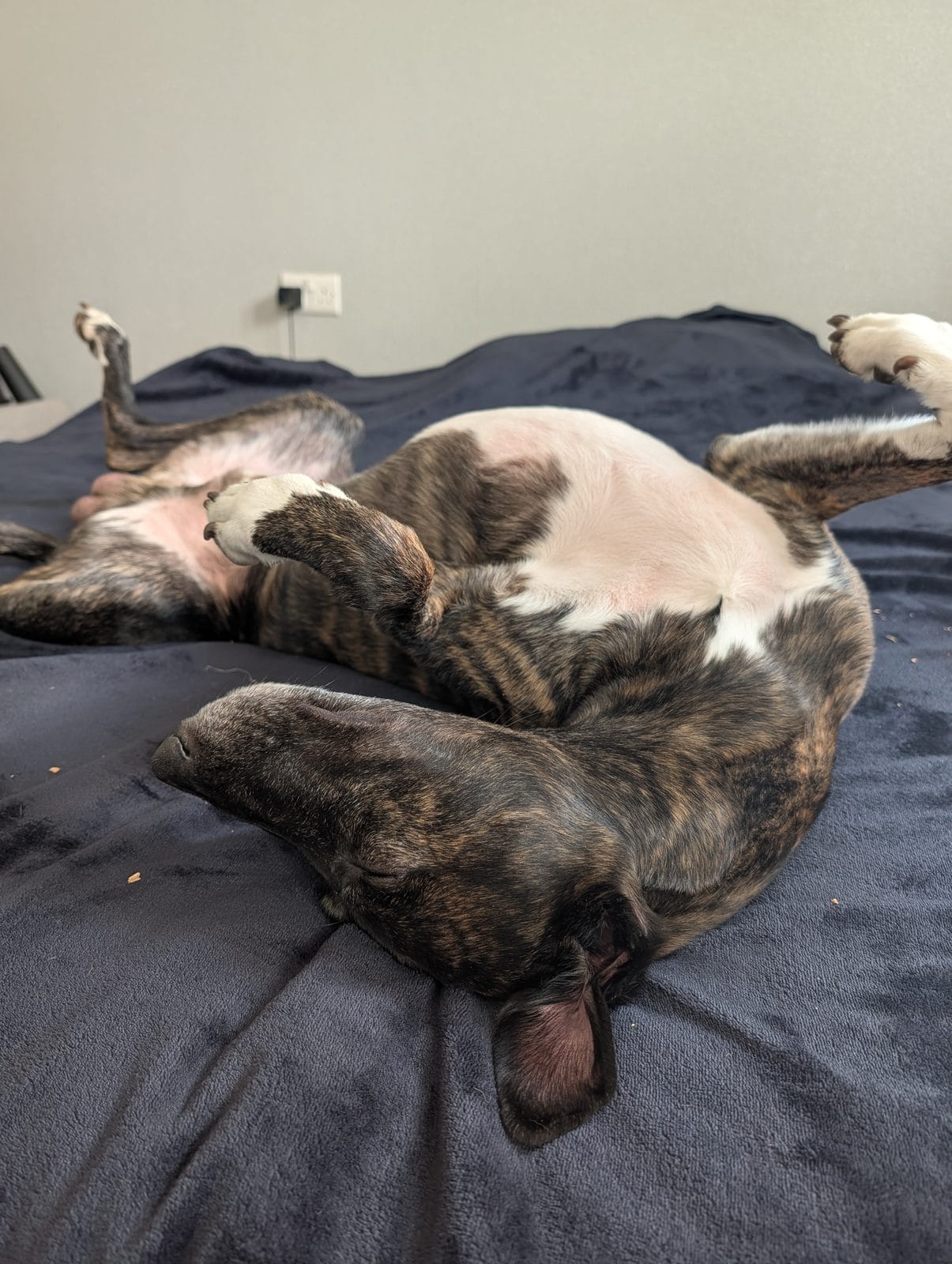
A sighthound is born with it. They are built to sprint, with big hearts (in more ways than one) made to push thick blood (the high haematocrit). Amos hates the vets: standing in a consulting room at my own vet’s for a booster, his heart rate was 86. Upside down in his bed it’s around 60.
At 06:46 on 13 June, lying on a wet bed and not moving, it was “around 120”. The two things that do that to a resting heart rate are pain and losing blood.
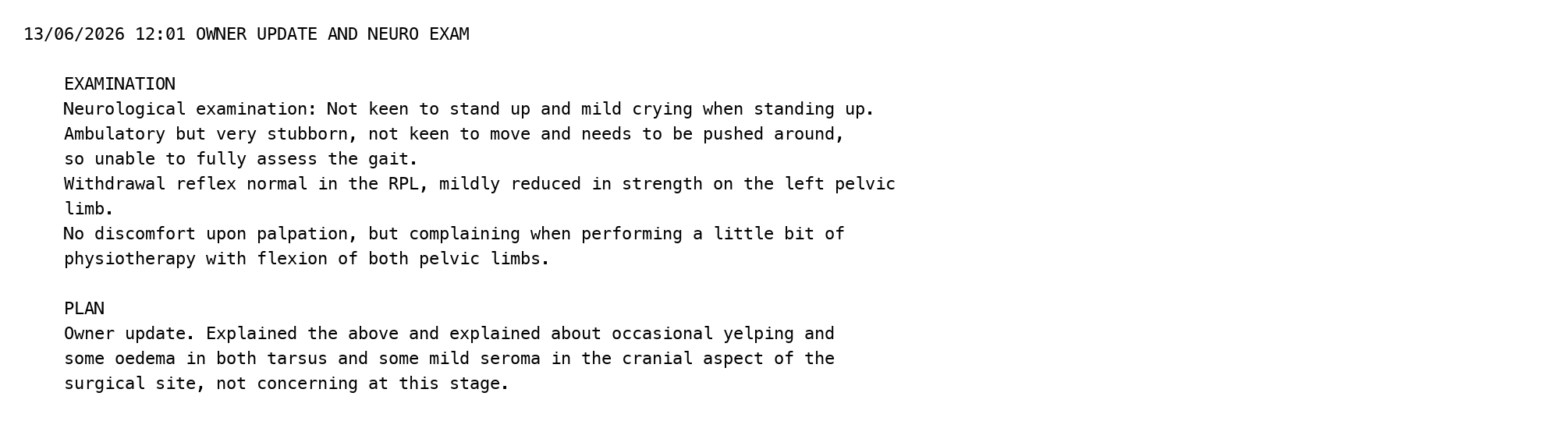
“Ambulatory but very stubborn, not keen to move and needs to be pushed around.” Same entry: “complaining when performing a little bit of physiotherapy with flexion of both pelvic limbs… some oedema in both tarsus… not concerning at this stage.”
The previous day’s CT, never reported, I believe already showed the planes around his spine filling with fluid.
June 14

Yesterday it was “stubborn”. The next morning “Passing urine on bed”, for the second day running.
Amos has never toileted indoors. In July, when every step made him scream in pain, he still took every step to get outside.
I don't believe Amos was wetting the bed because he was stubborn and didn't want to move. I don't think he could.
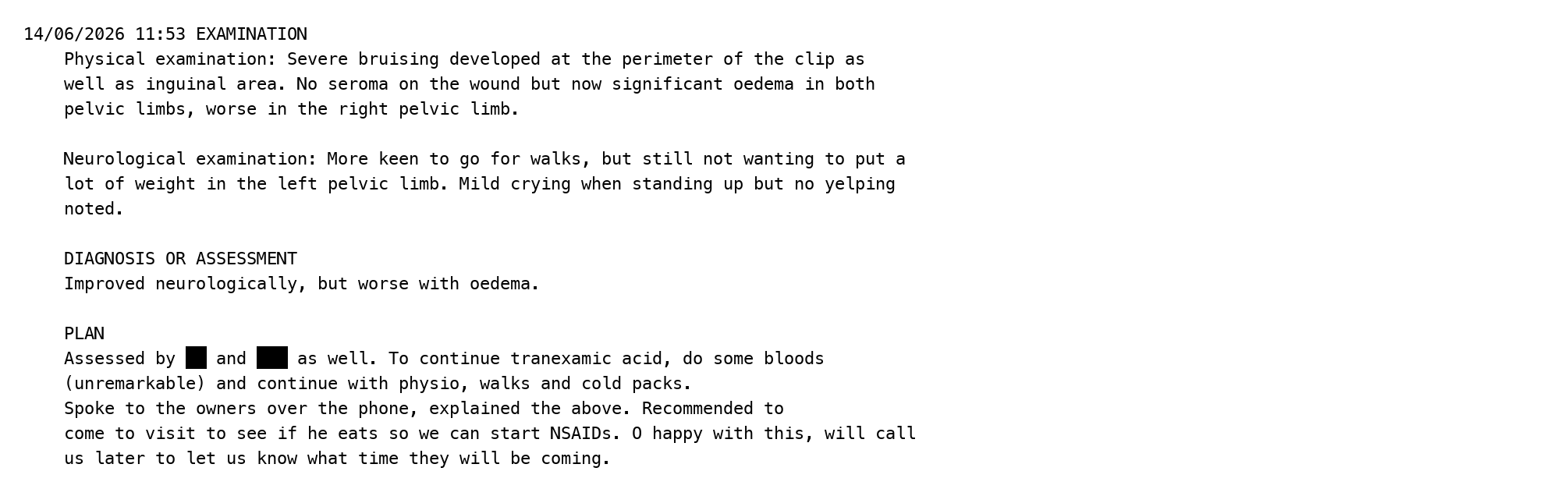
"To continue tranexamic acid"

The invoicing I have supports a switch from tablets to IV, not just a continuation.
“Recommended to come to visit to see if he eats so we can start NSAIDs.”
NSAIDs. A non-steroidal anti-inflammatory, the family ibuprofen belongs to. They thin the blood. They stop platelets working properly, which is why the first thing a doctor asks before surgery is whether you’ve taken ibuprofen. The plan, written on the day of the severe bruising, in the same note as the intravenous drug to stop bleeding, was to start one as soon as he’d eaten enough to take it.
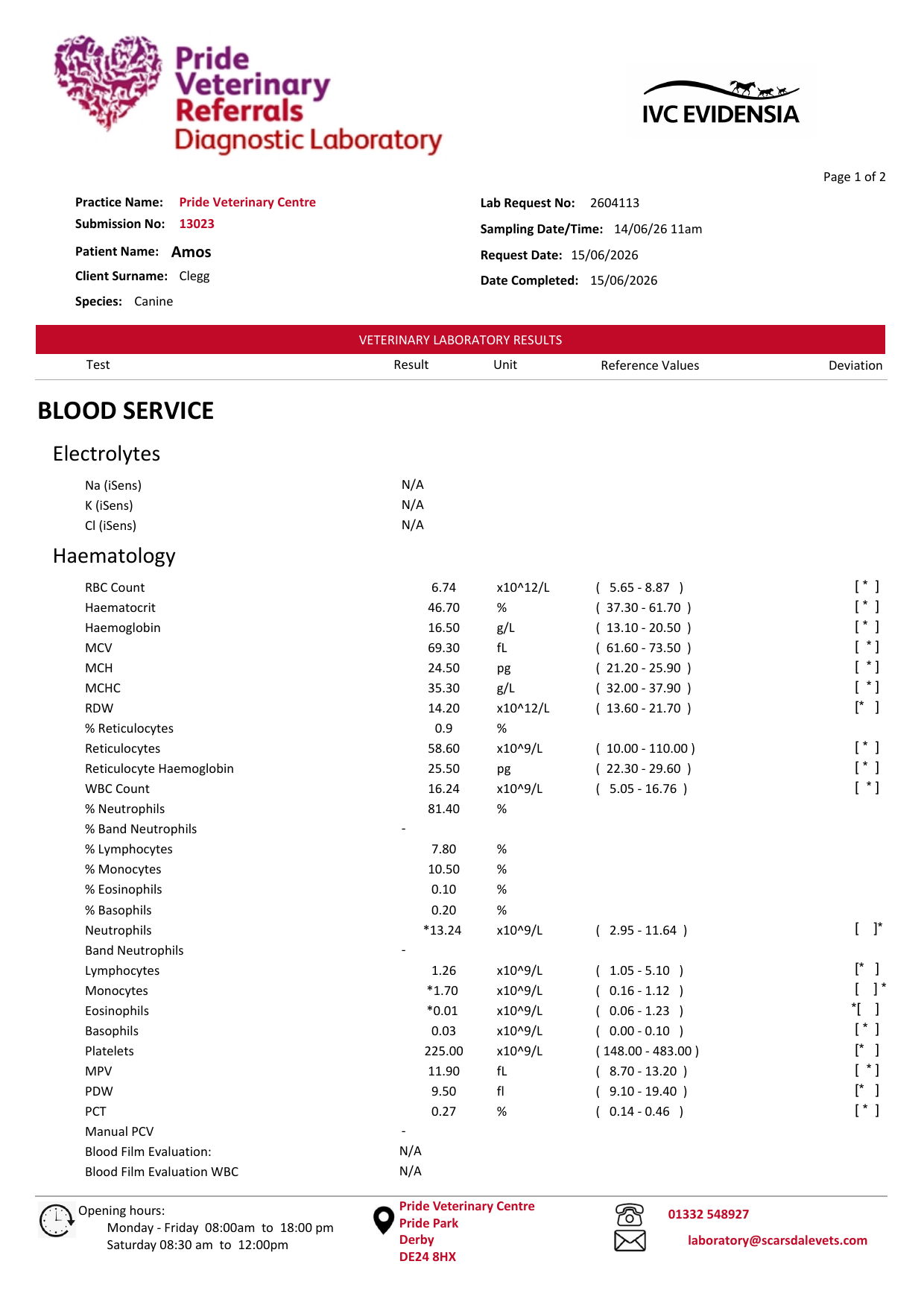
"Bloods (unremarkable)"
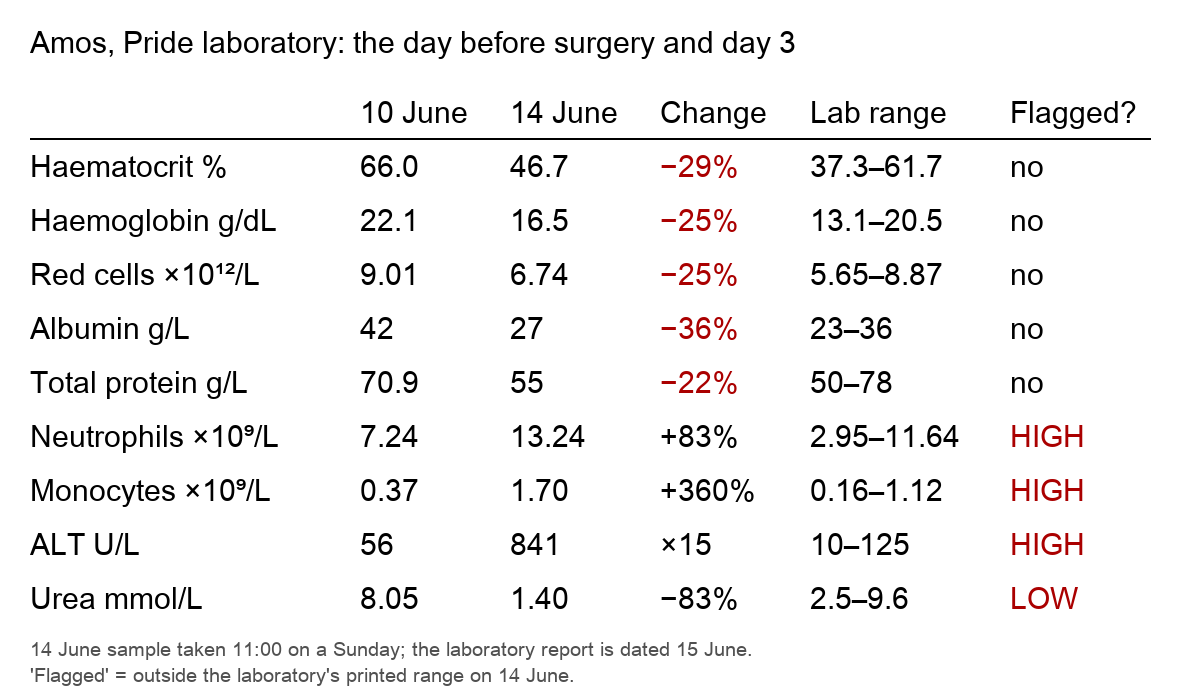
Red cells, the haemoglobin inside them, and the proteins that hold fluid in the vessels, all down by a quarter to just over a third in four days.
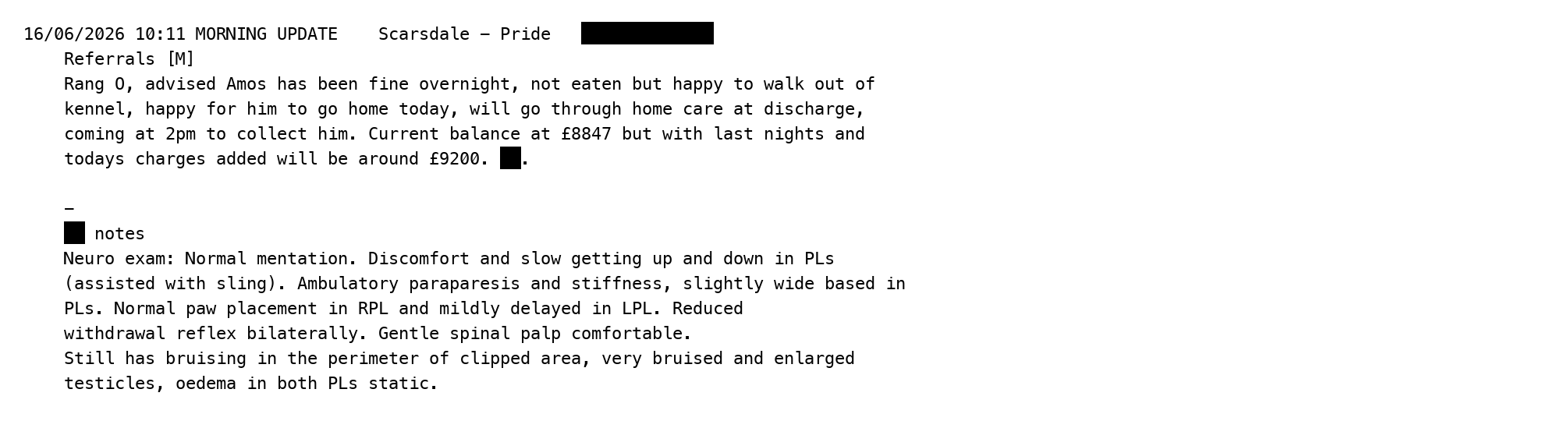
Not one of those rows is flagged, because every value landed inside the laboratory’s printed range. That range is for a generic dog. Amos pre-op values were above that range.
The bottom four rows the laboratory did flag. White cells up, a liver enzyme at fifteen times its pre-op value, urea collapsed. Those were marked with an asterisk on the report, and the note still says "unremarkable".
I visited Amos this day. I didn't see the "unremarkable" blood results until 2 October.
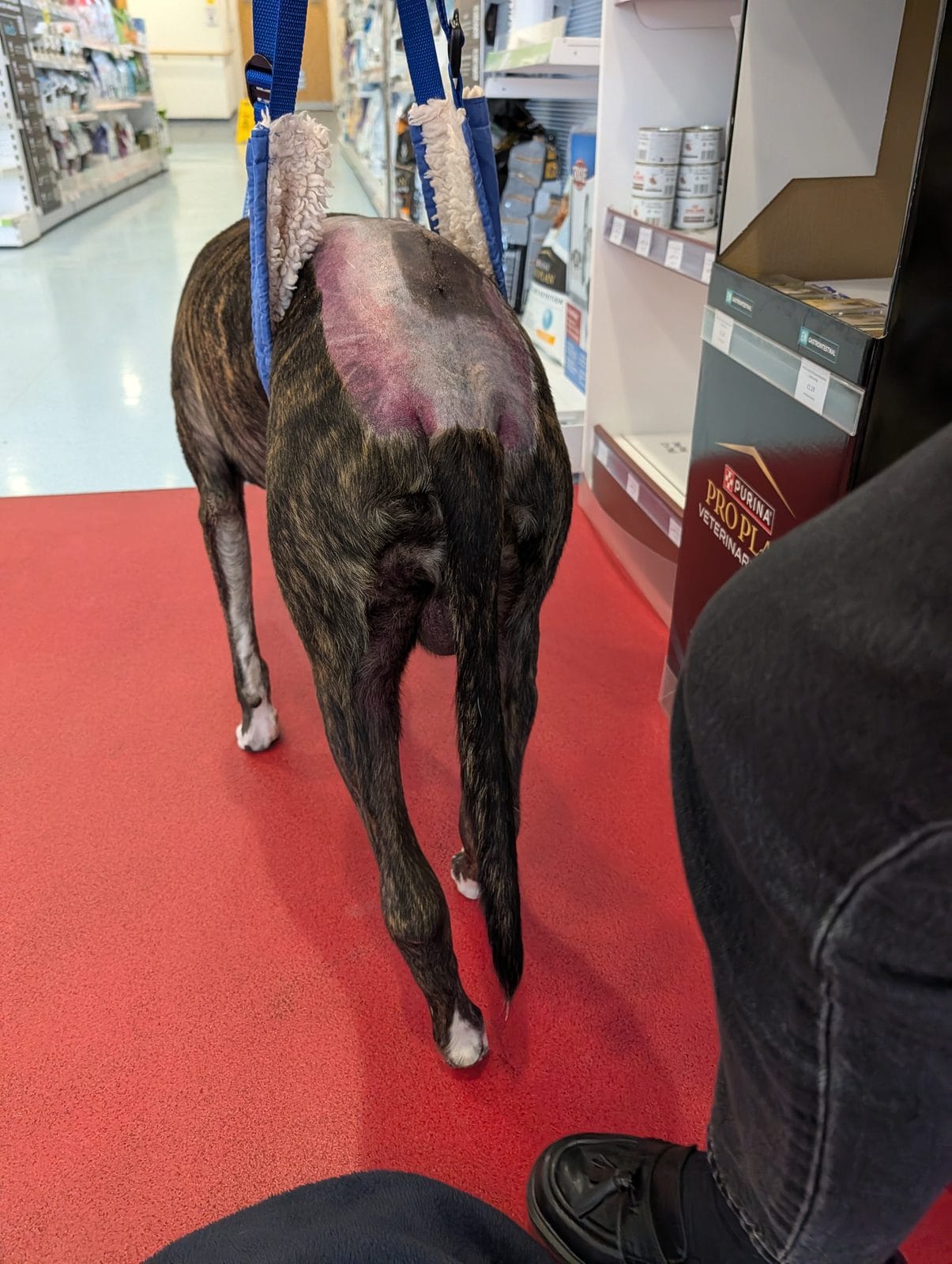
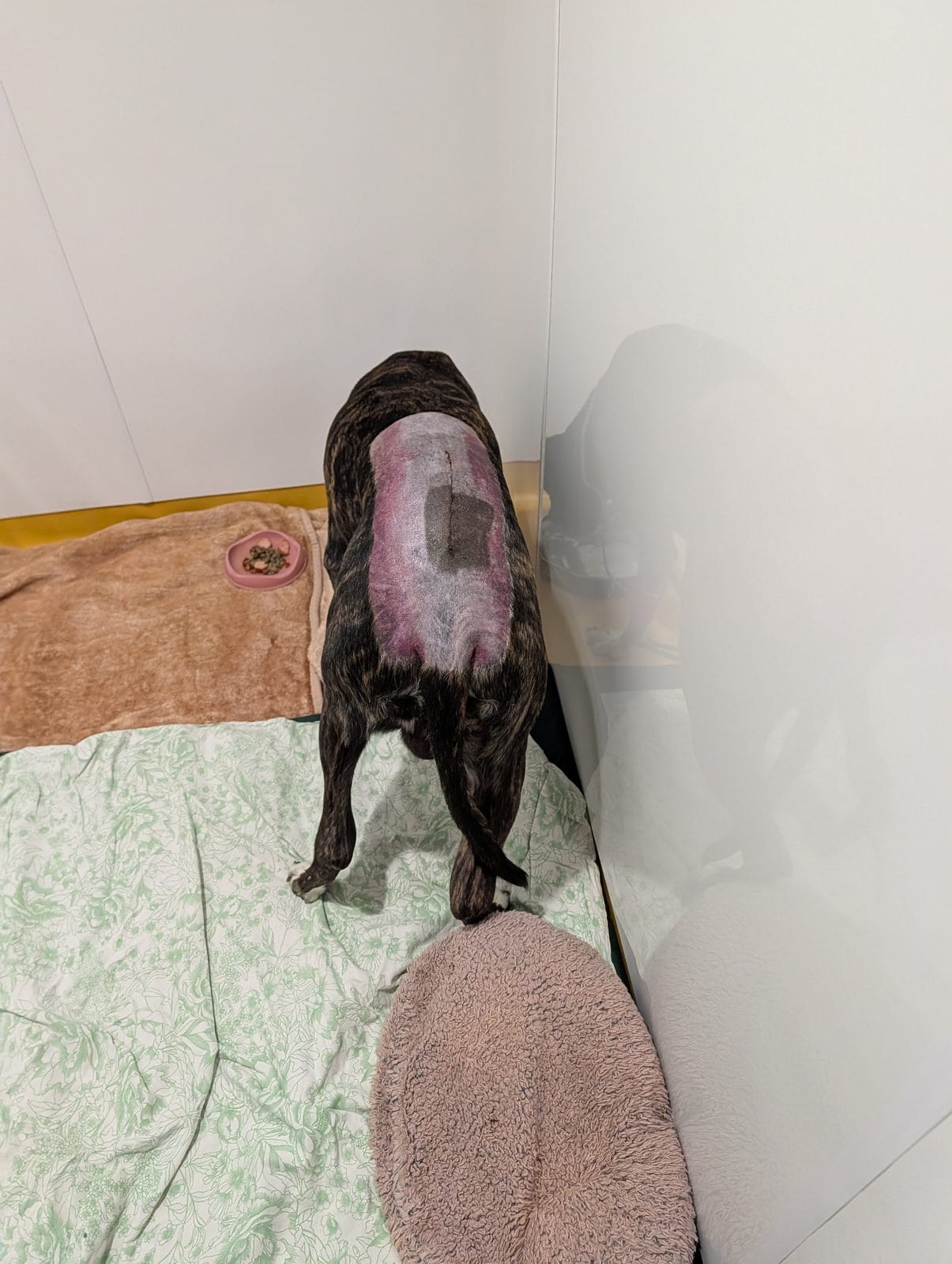
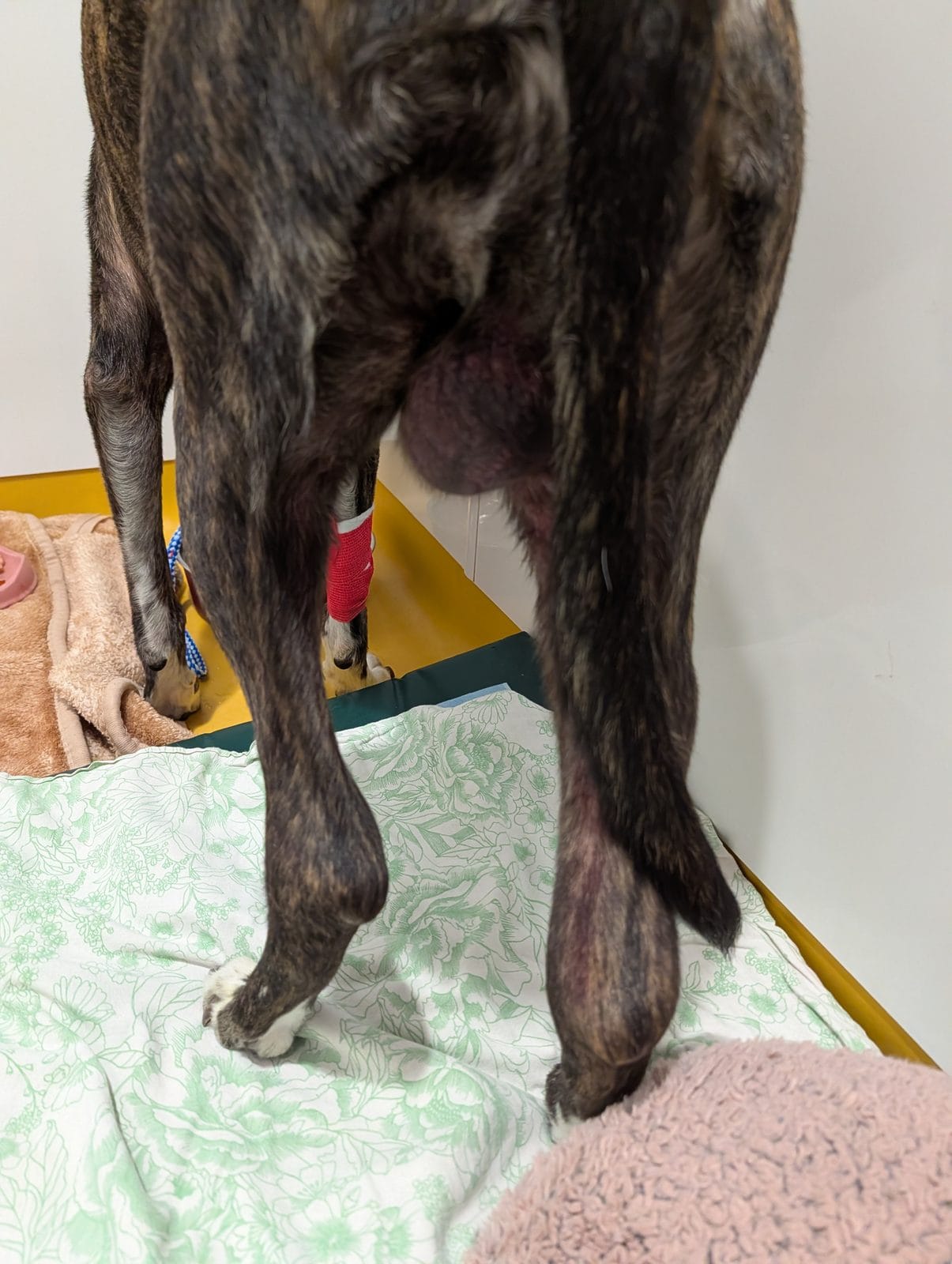
He ate half a steak and a spoonful of peanut butter that I brought for him.
I was told the swelling was nothing to worry about, and shown how to massage it towards the lymph nodes for drainage.
June 15

“Swelling of the limbs increased.”
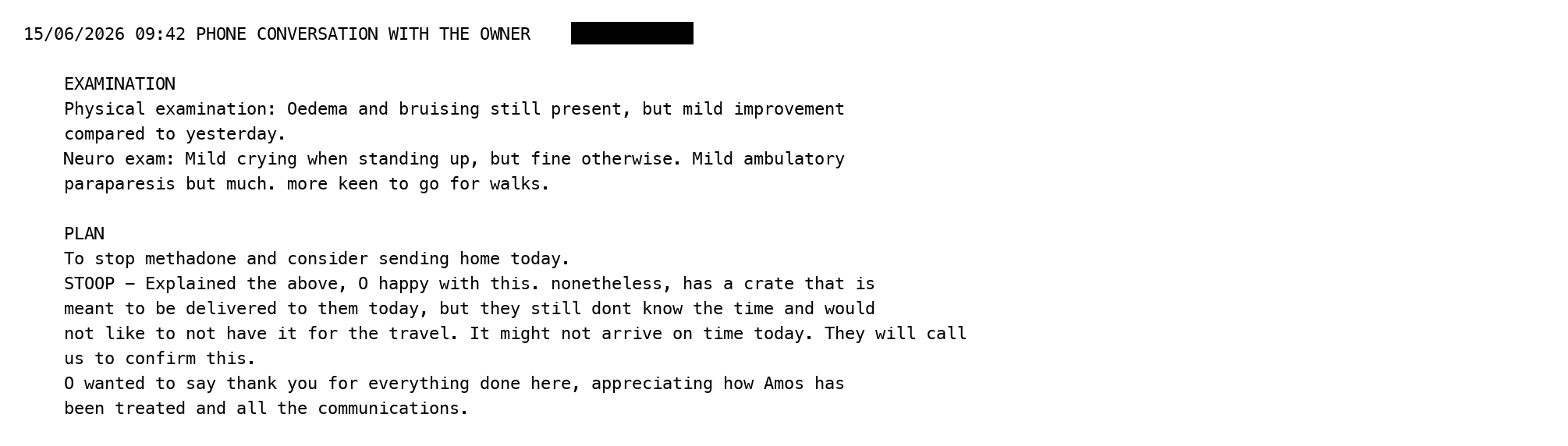
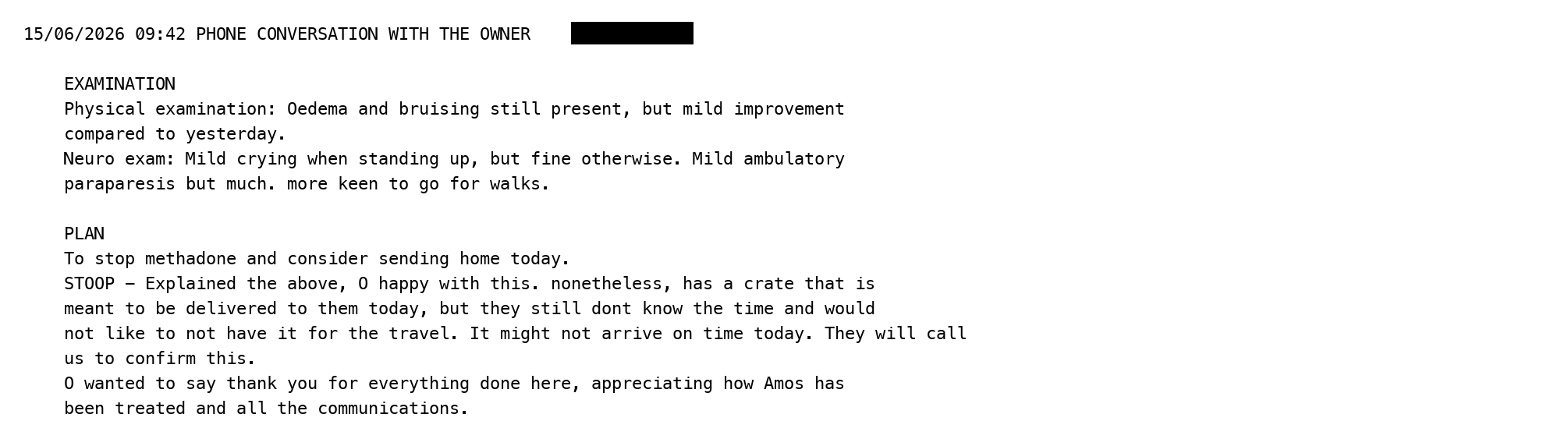
"mild improvement compared to yesterday"
Not sure those two lines fit together.
"consider sending home today"
You might be able to guess where this is going. I wish I had at the time.
June 16

Not eating but not concerned.
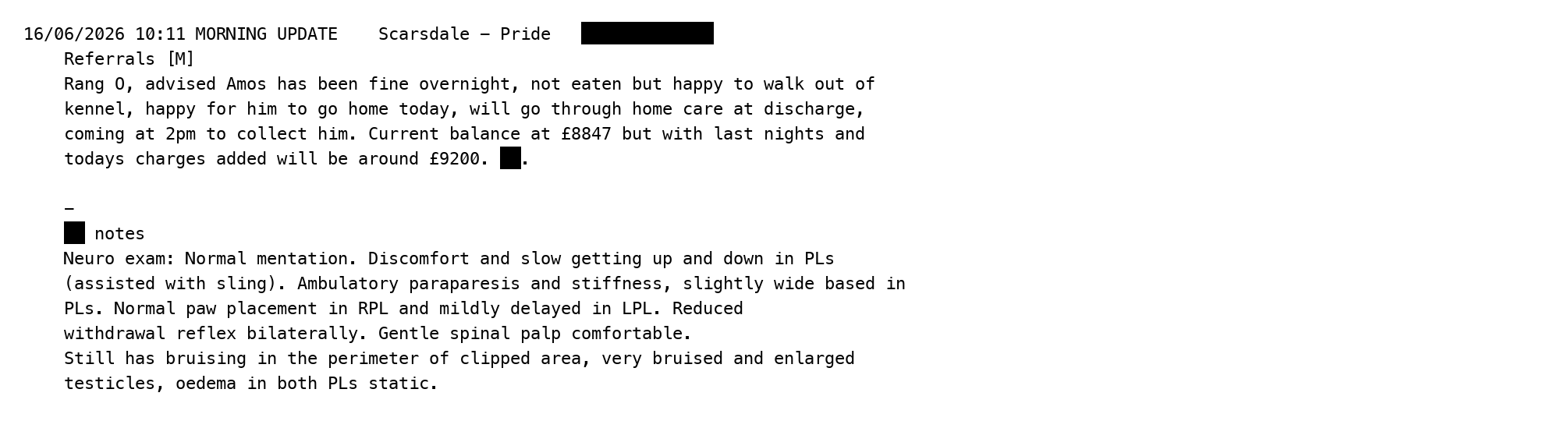
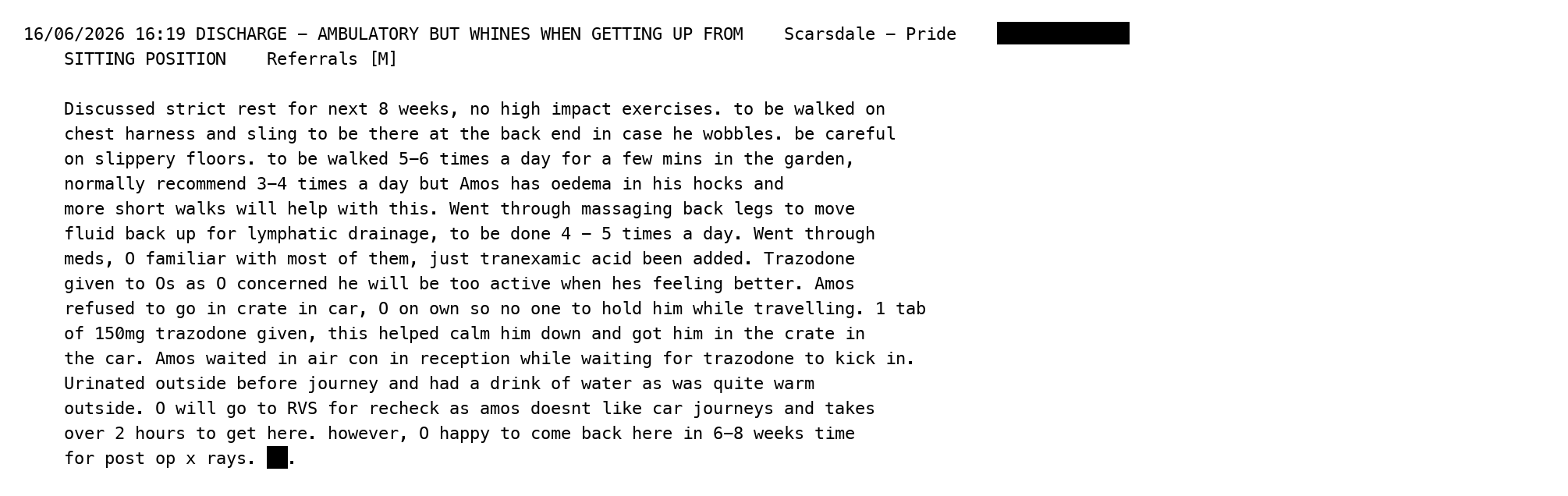
Went through massaging back legs to move fluid back up for lymphatic drainage, to be done 4 - 5 times a day. Went through meds, O familiar with most of them, just tranexamic acid been added.
Added a drug used to stop bleeding for you to keep giving at home. Massage the blood back up his legs 4-5 times a day.
I had no idea it was blood.
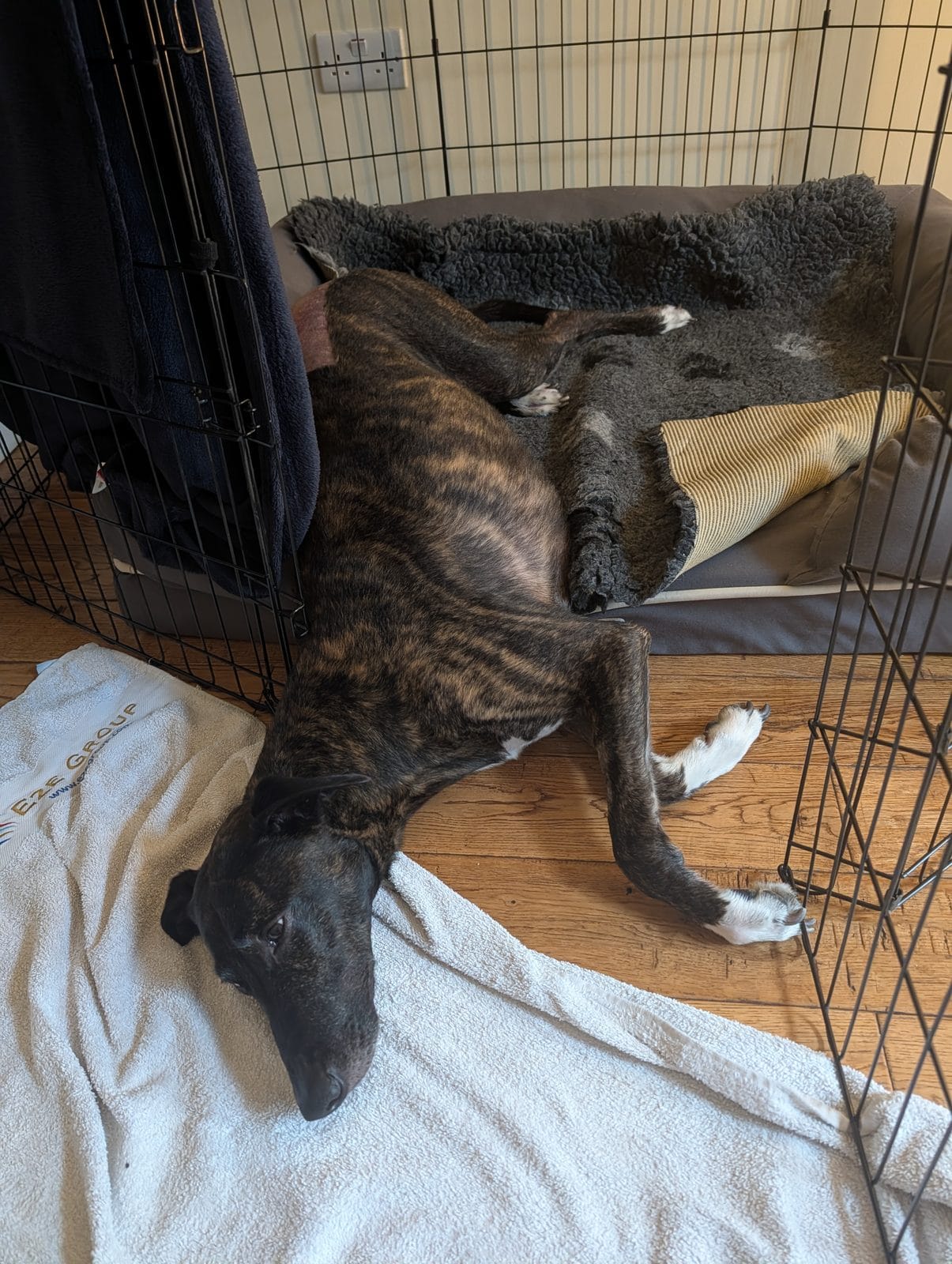
I had no idea he had been urinating where he lay.
Within twelve hours of the discharge I had phoned Pride.


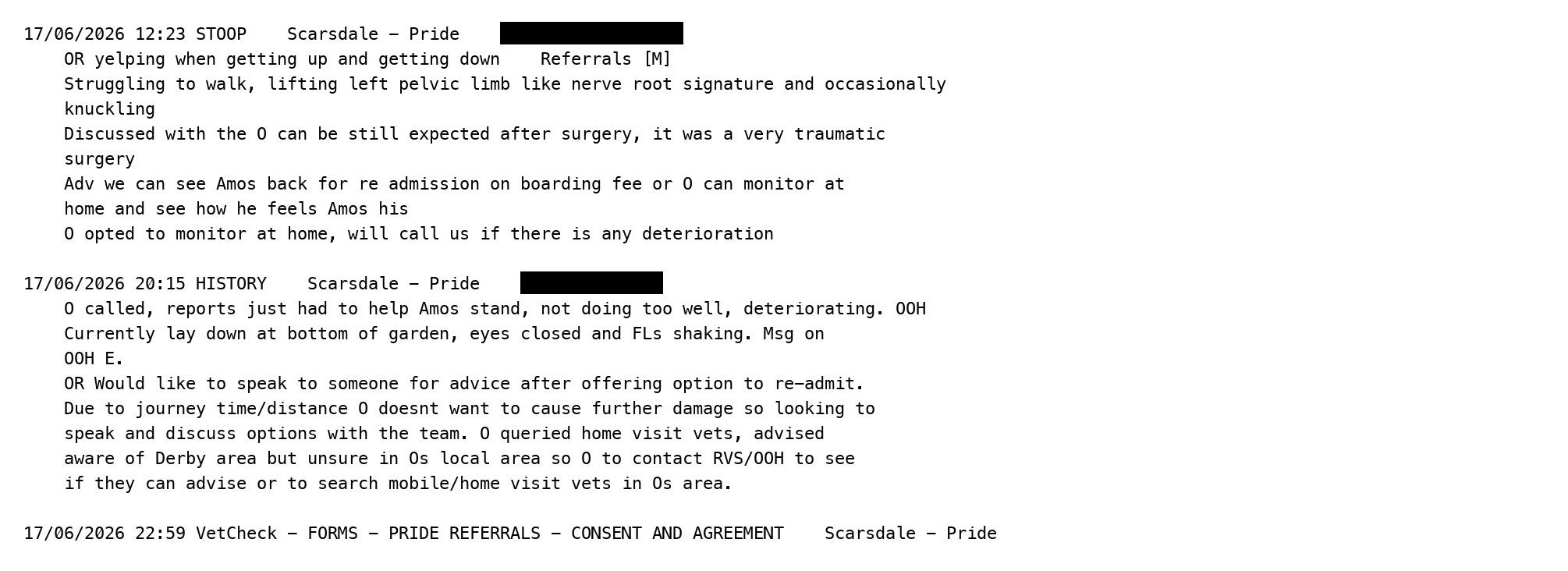
"it was a very traumatic surgery"
The first I had heard of it. Back at home, two hours from Pride. Six days earlier, the night of the operation, the same resident had written “No significant complications” and told me the x-rays “appear to be fine”. The surgery report, written three weeks later, says “overall happy”. The operation was only ever traumatic once he was out of the building.
"struggling to walk, lifting left pelvic limb like nerve root signature and occasionally knuckling"
A nerve root signature is a dog holding a leg up because a nerve is being pinched. Knuckling is a foot folding under on its own because the signal isn’t reaching it. Both are new since discharge. Both are things the record itself says are nerve signs.
"re-admission on a boarding fee"
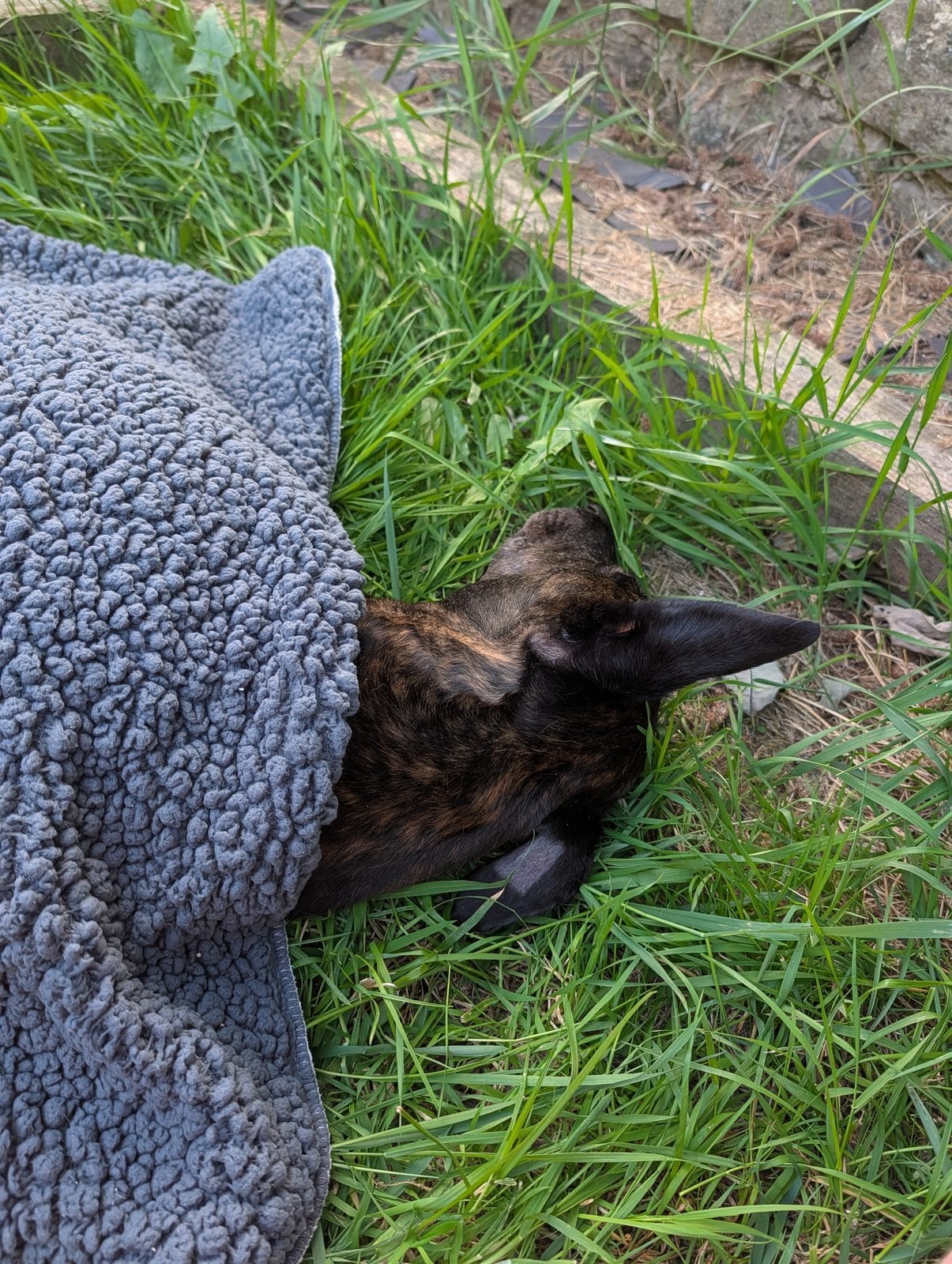
Pride’s offer for a dog with new nerve signs, the day after it sent him home: a bed, at the boarding rate, or stay where you are. I stayed where I was. At 20:15 he was at the bottom of the garden with his eyes closed and his front legs shaking. He was back on the ward by eleven.
"currently lay down at bottom of garden"
Since July I have asked Pride, and then IVC Evidensia, many times, for Amos' records and for some answers.
It is 21 October. I still don’t have them.