IVC finally replied
In a single day, a response to my complaint, the records I'd been requesting since July and a response (if you can call it that) to my subject access request. Wonder if someone found my blog?

22 October was an interesting day.
After weeks of "Thank you for your patience", "we are taking your concerns extremely seriously". And not a lot else.
In a single day, a response to my complaint, the records I'd been requesting since July and a response (if you can call it that) to my subject access request. Wonder if someone found my blog?
My tl;dr
- Hydrotherapy on 8 July was carried out after consent had been withdrawn. No individual authorised the session. The only consent relied upon was the one I had withdrawn.
- No written handover was sent to Gatehouse Vets before discharge, despite my specific request. The first document reached them at 11:15 on 13 July, two days after discharge and shortly after I had dropped Amos off there for the day around 09:00.
- The practice's earlier statement that Amos's crying had resolved from 6 July was "expressed too definitively" and did not reflect the nursing chart.
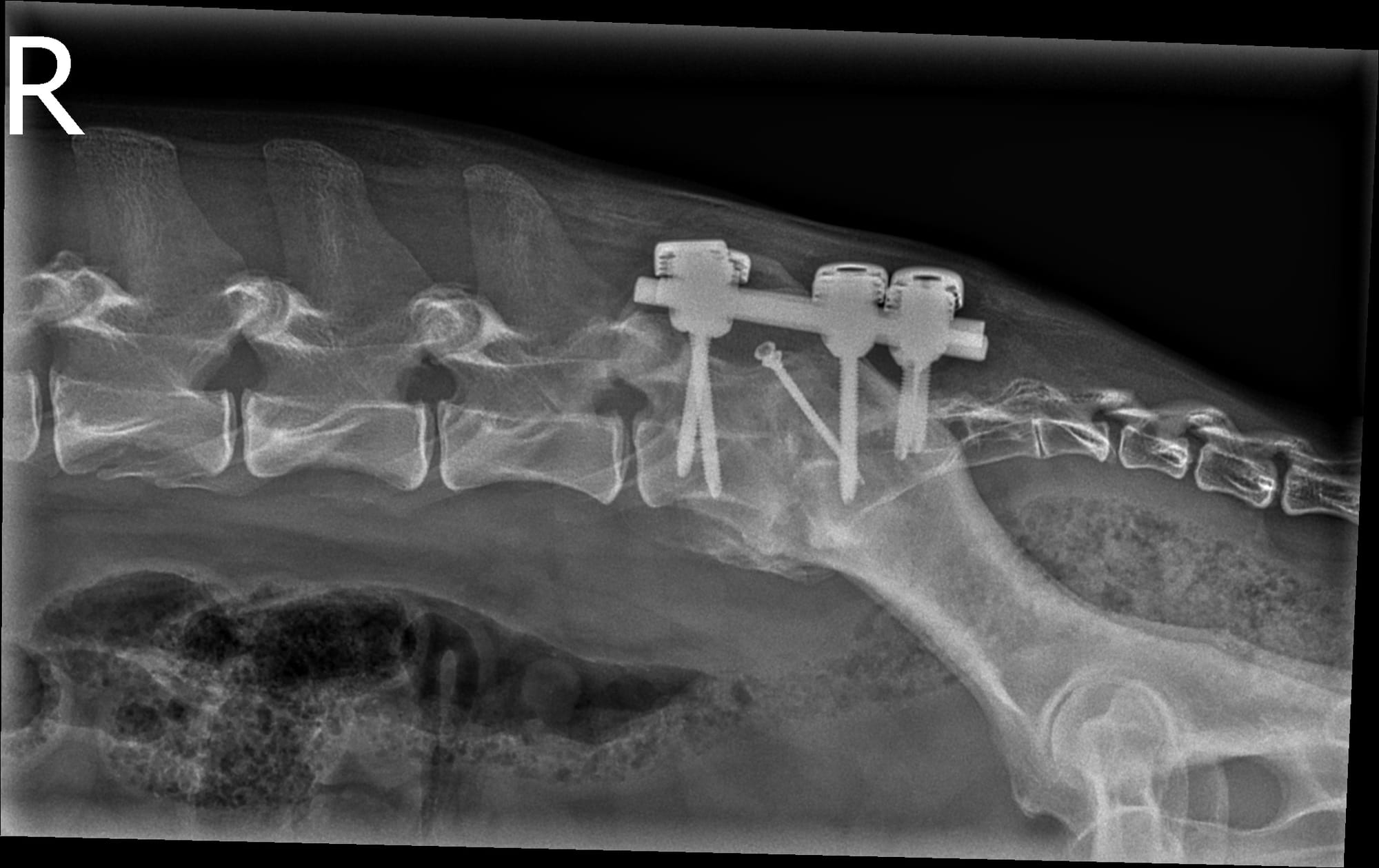
- Before discharge on 11 July, imaging showed collapse of the L7–S1 disc space, ventral displacement of S1 and movement of the right S1 screw.
- Amos's recorded weight fell from 34.7 kg on 3 July to 29.2 kg on 10 July, and it is "not possible retrospectively to determine" how much was genuine tissue loss.
- Temperatures above 39.0°C were recorded on several days between 5 and 9 July and were treated with cooling measures. They were not investigated and no antimicrobial was started.
- Negative cultures cannot exclude infection. It is "possible that the infectious process was developing before it became radiographically apparent".
- The six questions of 25 July were not answered, then or later.
- [the Hospital Manager] had "some involvement" in cost decisions relating to Amos's care before conducting the practice-level review.
- The clinical record misidentified Aireworth Vets as Amos's primary practice.
- Trazodone was dispensed twice in June (10 June and 11) and Pride cannot say why.
- The supplementary notice I requested was not added when first asked, and was not included when the records were shared with other providers.
- A new injury in transit on 11 July could not have been excluded without examination.
Most of these are followed in the letter by a statement that it did not cause the outcome. I note that the letter never finds that the care was appropriate. Its highest word is “reasonable”, each time measured against “the information available” to the team at the time, and its other findings are that I have not proved the contrary.
Below is the response to my complaint in full, with names redacted:
Dear Mr Clegg,
Thank you for your correspondence dated between 21 August and 7 October 2026, in which you set out your ongoing concerns regarding the service provided by Scarsdale Vets Pride Referrals for Amos. I also acknowledge your recent email to Pride referrals dated 5 October 2026.
My name is [name redacted], veterinary surgeon MRCVS and Clinical Consultant for IVC Evidensia, and I have been asked to undertake a further review of your concerns. Thank you for your patience while I have looked into this matter, and please accept my sincere apologies for my delay in responding.
To ensure that I had a full understanding of the circumstances, I have carefully reviewed the extensive relevant correspondence, Amos’s contemporaneous clinical records, and have liaised with the practice. From your correspondence, I understand your outstanding concerns to be as follows:
- you are unhappy that hydrotherapy was carried out on 8 July after you had withdrawn your consent, and you would like clarification about who authorised the session, what consent was relied upon, and whether a pre-treatment assessment and incident review were completed
- you remain concerned about the clinical basis for Amos’s discharge on 11 July 2026, including the consideration given to the nursing observations, signs of pain, temperature and recorded weight loss
- you remain dissatisfied with the explanation for the recorded pain scores and the apparent discrepancy between the nursing records and the later statement that Amos’s crying had resolved from 6 July
- you are concerned about the adequacy of the clinical handover following discharge, including the communication of Amos’s analgesia plan and information about the surgical construct
- you are concerned that Amos’s records may remain incomplete and would like confirmation that all relevant information was preserved and disclosed, including hospital and medication charts, operative and anaesthetic records, implant traceability information, laboratory and imaging documentation, hydrotherapy records, correspondence, call recordings and system audit information. You have also asked for any emails not already included in Amos’s clinical history to be added retrospectively in chronological order, with an explanation of why each was not added at the time, followed by a new export of the complete clinical history
- you are dissatisfied that the supplementary notice you requested was not added to Amos’s clinical history to record your disagreement with specified behavioural, owner-related and telephone entries, or included when his records were shared with other veterinary providers
- you remain concerned that the clinical record incorrectly identifies Aireworth Vets as Amos’s primary practice rather than the emergency practice that assessed him
- you would like clarification regarding the authorship, timing and amendment history of the entries made on 12 July 2026, including the records of the out-of-hours telephone discussions, the communication with the examining vet and the entries attributing aspects of Amos’s presentation to behavioural or owner-related factors
- you remain dissatisfied that the six clinical questions you submitted to [the treating neurologist] on 25 July were not answered, either at the time or after the weekend, and you would like us to assess each question based on the information available to Pride on that date. You would also like an explanation as to why no further response was provided.
- you remain dissatisfied with the scope and independence of the clinical review, as [the Hospital Director] had previously been involved in cost approvals relating to Amos’s care, and you seek clarification regarding the identity and remit of the reviewing neurologist and whether an external clinical-governance review took place
- you are dissatisfied that Pride’s response did not address the subsequent findings from University of Liverpool Small Animal Teaching Hospital (LSATH), including severe L7–S1 discospondylitis, disc-space collapse and implant movement
- you feel that Pride Veterinary Referrals should accept responsibility for the further treatment and associated costs incurred following Amos’s discharge
I will now address these concerns in turn.
You are unhappy that hydrotherapy was carried out on 8 July after you had withdrawn your consent, and you would like clarification about who authorised the session, what consent was relied upon, and whether a pre-treatment assessment and incident review were completed
The practice has previously acknowledged that the hydrotherapy session on 8 July proceeded after you had withdrawn your consent, and I recognise the upset this has caused you. As already explained, the session had been planned on the basis of the consent previously provided, and the team carrying out the treatment had not been made aware that this consent had subsequently been withdrawn. There was therefore no further individual authorisation of the session, as the staff involved reasonably believed that valid consent remained in place.
The physiotherapist would have assessed Amos before the session, as treatment is tailored to the individual patient and their presentation at the time. I have not identified any evidence that this hydrotherapy session caused Amos harm.
The practice has accepted that there was an internal breakdown in communication, reviewed how this occurred and introduced measures intended to prevent a similar incident. Although I appreciate that this does not undo what happened, I am unable to provide any further explanation beyond that already given. I can only reiterate our sincere apologies that your withdrawal of consent was not communicated to the treating team and for the understandable upset this caused you.
You remain concerned about the clinical basis for Amos’s discharge on 11 July 2026, including the consideration given to the nursing observations, signs of pain, temperature and recorded weight loss
I appreciate that you were mindful of previous occasions when Amos had appeared relatively comfortable in a clinical setting but had shown more pronounced signs after returning home. I understand why this history caused you to question whether his presentation in hospital accurately reflected how he would manage following discharge.
I have considered the clinical and nursing entries from the days preceding Amos’s discharge on 11 July, including the observations made on the day itself, which you believe should have supported continued hospitalisation. Although Amos was still occasionally showing signs of stiffness or discomfort when standing or lying down, this would not, in itself, have contraindicated discharge. His recovery was always expected to be prolonged, and it would not have been realistic to expect him to be completely free from discomfort in the short term, particularly following significant spinal surgery and the subsequent collapse of the L7–S1 disc space.
I have also carefully considered your concerns about Amos’s weight. His recorded weight reduced from 34.7 kg on 3 July to 29.2 kg on 10 July. Intermediate measurements were 34.1 kg on 5 July, 30.8 kg on 6 July, 30.4 kg on 7 July and 29.7 kg on 8 July. This was likely to have been multifactorial, with reduced nutritional intake, loss of lean body mass during illness and restricted activity, changes in hydration and elimination, and possible measurement variation all potentially contributing. The particularly abrupt change recorded between 5 and 6 July is unlikely to represent tissue loss alone. However, it is not possible retrospectively to determine precisely how much of the overall reduction reflected genuine tissue loss rather than short-term fluid or measurement variation. Although the reduction warranted consideration, weight alone does not determine suitability for discharge. By 11 July, Amos was documented as eating his calculated nutritional requirement and was considered clinically stable. The clinical team therefore assessed the weight alongside his appetite, hydration, mobility, toileting and overall progression, rather than treating it as an isolated contraindication to discharge.
I appreciate that you have referred specifically to the temperature of 39.2°C recorded on 8 July because discharge was being considered for the following day, and you feel that this should have counted against the recommendation. A temperature of 39.2°C is at the upper limit of the recognised normal rectal temperature range for dogs and would not, in isolation, have indicated pyrexia or contraindicated discharge. The clinical team would have considered it alongside Amos’s demeanour, other clinical observations, the appearance of his surgical site and the overall temperature trend. I note that Amos’s temperature was above 39.0°C on several occasions between 5 and 9 July, reaching 39.6°C on 9 July. These readings were monitored, and cooling measures were used where appropriate. His temperature reduced to 38.5°C later that day and remained within the expected range thereafter, including a reading of 38.1°C on the morning of discharge on 11 July. Against that improving trend, and in the absence of other findings at that time that led the team to suspect an active infection, the earlier temperature readings did not provide a clinical reason to prolong Amos’s hospitalisation on 11 July.
The decision to discharge Amos was not based upon any single observation or pain score. The team considered his overall progression over several consecutive days. By 11 July, he was documented as standing and lying down without obvious signs of pain, walking voluntarily, eating his full nutritional requirement, taking his oral medication and toileting independently. The frequency and severity of the earlier vocalisation had also reduced. On that basis, the clinical team reached a consensus that Amos had made sufficient progress to continue his recovery at home with oral analgesia, a staged rescue-medication plan and guidance about the changes that should prompt further veterinary assessment.
I recognise your concern that Amos might show more discomfort at home than he did in hospital. That possibility was considered, particularly in light of the information you had provided about his previous behaviour and his tendency to mask pain in clinical settings. However, it was not possible to predict exactly how he would respond to the journey or the change in environment. At the time the recommendation was made, there was no clinical evidence indicating that extending his hospitalisation would be necessary or more beneficial to his recovery.
I would also like to reassure you that the recommendation was based on the clinical team’s assessment of Amos and was not influenced by financial considerations. You had made it clear that you were willing to meet the cost of further hospitalisation if this was considered necessary, and there is no evidence that you placed the team under any financial pressure to discharge him. This supports the conclusion that the recommendation was made because the team genuinely considered Amos clinically ready to continue his recovery at home.
I appreciate your wish to rely on objective information when reviewing this decision. Objective findings are important, but clinical decision-making also requires professional interpretation of the patient’s behaviour, repeated examinations, response to treatment and overall progression. This inevitably includes some degree of clinical judgement, particularly in veterinary patients who cannot describe the nature or severity of their discomfort.
Having reviewed the available clinical and nursing records, and Amos’s progression between 3 and 11 July, I have not identified evidence that the recommendation to discharge him on 11 July was an unreasonable clinical decision based on the information available to the team at that time. I recognise that his subsequent difficulties have understandably led you to question that judgement. However, a poor or unexpected outcome following discharge does not, by itself, establish that the original decision was clinically inappropriate.
You remain dissatisfied with the explanation for the recorded pain scores and the apparent discrepancy between the nursing records and the later statement that Amos’s crying had resolved from 6 July
I acknowledge that the statement that Amos’s crying had resolved since 6 July was expressed too definitively and did not fully reflect the more nuanced picture documented in the nursing chart. The records indicate that the frequency and severity of Amos’s vocalisation had reduced significantly, but they do not establish that there were no further isolated episodes after 6 July. A more accurate description would therefore have been that his earlier episodes of crying had substantially improved, rather than completely resolved.
However, occasional vocalisation or signs of discomfort when rising, lying down or repositioning would not necessarily indicate uncontrolled pain or mean that Amos was unsuitable for discharge. He was recovering from significant spinal surgery, and some ongoing discomfort was anticipated. The relevant consideration was whether his pain appeared manageable with oral medication and whether his overall clinical progression supported continued recovery at home.
Pain scores are also not interpreted in isolation. They form part of a broader clinical assessment that includes the patient’s posture, mobility, response to handling, demeanour, appetite, ability to rest, toileting and response to analgesia. In Amos’s case, the team considered the repeated nursing observations and his overall progression, including that he was moving voluntarily, eating, toileting and settling between interventions.
I appreciate that you believe the later episodes of vocalisation should have carried greater weight, particularly because you had explained that Amos could mask pain in hospital. Nevertheless, having reviewed the pain-related observations alongside the remainder of the clinical record, I have not identified evidence that the recorded discomfort was considered uncontrolled at the time of discharge or that it independently contraindicated discharge on 11 July.
You are concerned about the adequacy of the clinical handover following discharge, including the communication of Amos’s analgesia plan and information about the surgical construct
Before Amos returned home, the team had discussed his medication and staged rescue-analgesia plan with you, together with the recent imaging findings, the clinical assessment of the surgical construct and the changes that should prompt further veterinary advice. You therefore had information about how to administer his medication and respond to different scenarios at home.
You had also specifically asked for Amos’s current treatment and rescue-analgesia plans to be sent to Gatehouse Vets, as his primary practice, and to the relevant local out-of-hours provider before he left Pride. Having reviewed the available records, I have not identified evidence that a formal written handover was sent to Gatehouse Vets before Amos was discharged on 11 July. The referral documentation appears to have been sent to Gatehouse Vets at 11:15 on 13 July.
Aireworth Vets had examined Amos as an emergency on 12 July, and Pride communicated directly with the examining vet before subsequently sending the referral report and weekend clinical notes to that practice on 13 July. However, I recognise that this communication took place in response to Amos requiring veterinary attention and was not a substitute for the planned handover to his primary practice before discharge.
Although the medication and monitoring instructions had been discussed directly with you, I acknowledge that it would have been preferable for a concise written handover to have been sent proactively to Gatehouse Vets before, or at the time of, discharge. This should have summarised Amos’s current medication and rescue-analgesia plan, the recent imaging findings, the assessment of the surgical construct and the circumstances in which local or specialist reassessment should be sought.
I have not identified evidence that the timing of the written handover prevented Amos from receiving veterinary attention or altered the treatment subsequently provided. Nevertheless, earlier direct communication with Gatehouse Vets would have provided a clearer and more coordinated transition from hospital to home, and I am sorry that the formal documentation was not sent sooner.
You are concerned that Amos’s records may remain incomplete and would like confirmation that all relevant information was preserved and disclosed, including hospital and medication charts, operative and anaesthetic records, implant traceability information, laboratory and imaging documentation, hydrotherapy records, correspondence, call recordings and system audit information. You have also asked for any emails not already included in Amos’s clinical history to be added retrospectively in chronological order, with an explanation of why each was not added at the time, followed by a new export of the complete clinical history
I appreciate your concern that the records provided to you may not represent the complete contemporaneous record of Amos’s care. I have therefore considered both the documentation already disclosed and the additional categories of information identified in your emails of 21 August and 5 October.
The practice has provided a substantial volume of information, including Amos’s clinical history, hospital charts, medication records, laboratory results, imaging and referral documentation. It is important to distinguish between an existing record that has not yet been supplied and information that was not recorded in the particular format you have requested. Not every aspect of clinical care generates a separate document. For example, clinical discussions, verbal decisions and routine assessments may be documented within the clinical history or hospital chart rather than in a standalone report. Similarly, a separate document cannot now be produced if one was not created contemporaneously.
Having reviewed the information currently available, I have considered the individual categories you identified, and as far as I understand:
- The hospital and medication charts held by the practice have now been supplied.
- The available operative, anaesthetic and theatre documentation has been supplied. The detailed surgical report was completed after the procedure, while the contemporaneous procedural information was recorded across the anaesthetic, theatre, hospital and consumables records.
- The available implant information has been disclosed.
- The laboratory results and imaging held in Amos’s clinical file have been supplied, including the available DICOM studies. Where no separate written imaging report or laboratory submission form was created or retained, there is no additional document that can now be disclosed.
- The available physiotherapy and hydrotherapy documentation has been supplied. The physiotherapist’s assessment was incorporated into the treatment record rather than documented as a separate formal risk-assessment report.
- Relevant email correspondence held by the practice, as well as recorded phone calls have been preserved, and it is my understanding these records will form part of your DSAR, which is being handled separately by IVC Privacy team.
I appreciate that the documentation is distributed across several different records and that this may have made it difficult to establish whether the disclosure was complete. However, based on the information available to me, I have not identified evidence that records relating to Amos’s care were deliberately withheld or removed. Where a requested standalone document does not exist, this does not necessarily mean that the underlying care or assessment did not take place; it means that it was either documented elsewhere within the clinical record or was not recorded separately.
I can confirm that we have liaised with our IT team and requested that all relevant electronic information is preserved. The practice is also retaining the clinical records, correspondence, and recorded phone calls it holds relating to Amos’s care and your subsequent concerns.
You have also submitted a subject access request, which has been referred to our Privacy team for separate consideration. The Privacy team is responsible for identifying and disclosing the personal data held within the scope of that request, including any relevant emails and recorded telephone calls. This process is separate from our review of the clinical complaint.
It is also important to distinguish between the preservation and disclosure of information and its inclusion within Amos’s clinical history. The clinical history is intended to provide an accurate and usable account of the information relevant to his clinical care. It is not intended to contain a complete copy of every email or other communication exchanged between you and the practice.
Some emails were copied into Amos’s clinical history because the information they contained was considered clinically relevant at the time. This does not mean that it would be appropriate or necessary to add the entire subsequent email exchange to the clinical history. Emails and other correspondence may appropriately be retained separately within the practice’s communication systems or client records.
You are dissatisfied that the supplementary notice you requested was not added to Amos’s clinical history to record your disagreement with specified behavioural, owner-related and telephone entries, or included when his records were shared with other veterinary providers
I acknowledge that the supplementary notice you requested has not been added to Amos’s clinical history, and I am sorry for the upset this has caused you.
As the practice previously explained, the clinician reviewing your request was concerned that adding the proposed notice could create uncertainty for veterinary professionals reviewing Amos’s history in future, or potentially cause them to place less reliance on clinical observations that remained relevant to his care. The matter was therefore referred for further guidance rather than the notice being added at that time.
However, I appreciate how important it is to you that your disagreement with the relevant entries is clearly visible to anyone reviewing Amos’s clinical history. We have therefore asked the practice to add a retrospective supplementary entry reflecting the wording you requested.
The supplementary entry states:
Retrospective supplementary entry added at the request of Mr Paul Clegg. Mr Clegg disputes entries within Amos’s clinical history dated 11, 12 and 13 July 2026 that characterise aspects of Amos’s presentation as behavioural or anxiety-related, suggest that Mr Clegg or the owner-patient interaction contributed to Amos’s presentation, or record telephone discussions in a manner that Mr Clegg considers inconsistent with his recollection and contemporaneous correspondence. The original clinical entries have not been altered or removed. This supplementary entry has been added to record Mr Clegg’s disagreement with those entries.
This will form part of Amos’s clinical history and will be included in any future export or disclosure of that history to another veterinary provider. I have attached a copy of the updated clinical records for your reference.
You remain concerned that the clinical record incorrectly identifies Aireworth Vets as Amos’s primary practice rather than the emergency practice that assessed him
I acknowledge that Amos’s clinical history incorrectly referred to the veterinarian who examined him on 12 July as his primary care veterinary surgeon, when Aireworth Vets had assessed him in its capacity as an emergency out-of-hours provider. We have now added the following clearly dated retrospective clarification: Aireworth Vets assessed Amos on 12 July 2026 in its capacity as an emergency out-of-hours provider. Aireworth Vets was not Amos’s established primary veterinary practice. Amos’s primary veterinary practice was Gatehouse Vets. This clarification has been added to ensure that the nature of Aireworth Vets’ involvement is accurately reflected. The original clinical entries have not been amended or removed.
The original entries remain unchanged, but the added comment ensures that the nature of Aireworth Vets’ involvement is accurately understood by anyone reviewing Amos’s history in future. You can confirm this in the attached copy of the updated clinical records.
You would like clarification regarding the authorship, timing and amendment history of the entries made on 12 July 2026, including the records of the out-of-hours telephone discussions, the communication with the examining vet and the entries attributing aspects of Amos’s presentation to behavioural or owner-related factors
The relevant entries are as follows:
- At 22:00 on 11 July, [the out-of-hours vet] recorded the initial telephone discussion following Amos’s discharge.
- At 02:27 on 12 July, [the out-of-hours vet] recorded the further overnight telephone discussion. The entry refers to your earlier call at approximately 23:00 and your subsequent call at approximately 00:30.
- At 09:30, [staff member A] recorded that you had called requesting an urgent response to an email sent to the Neurology inbox.
- At 12:25, [the treating neurologist] recorded receipt of a video supplied by you.
- At 12:45, [the treating neurologist] recorded a telephone update with you following his review of your email and the overnight communications.
- At 14:02, [the treating neurologist] recorded his telephone discussion with the veterinarian who examined Amos locally.
- At 14:14, [the treating neurologist] recorded the email sent to you following that discussion.
- At 15:15, [staff member B] entered the contact details for Aireworth Vets and identified it as the out-of-hours veterinary practice.
- At 23:54, [the treating neurologist] recorded a further email received from you and his response.
The clinical history therefore identifies the author and recorded time of each relevant entry, and I have not identified any anonymous entries within the sequence from 12 July. Where an entry summarises an earlier telephone discussion or information provided by another veterinary surgeon, the time shown against the entry may be later than the event it describes.
You also requested clarification regarding the creation and amendment history of these entries. We have passed this request to our IT department and will share the available audit information with you once it has been retrieved. Based on the records reviewed to date, we have no indication that the entries were retrospectively amended, and they appear to have been recorded contemporaneously with, or shortly after, the communications and events they describe. However, we will confirm this once the audit information is available.
I acknowledge that you disagree with the substance of the entries referring to behavioural or owner-related factors. Clarifying their authorship and timing does not resolve that disagreement. Your position has therefore been recorded in the supplementary notice added to Amos’s clinical history.
You remain dissatisfied that the six clinical questions you submitted to [the treating neurologist] on 25 July were not answered, either at the time or after the weekend, and you would like us to assess each question based on the information available to Pride on that date. You would also like an explanation as to why no further response was provided
I acknowledge that the clinical questions you submitted to [the treating neurologist] on 25 July were not answered individually, either in his response that afternoon or subsequently.
By that stage, however, you had advised Pride Veterinary Referrals that you did not intend to return Amos to the hospital and wished his ongoing care to be transferred elsewhere. I appreciate that this reflected the concerns you had developed about his care. Nevertheless, it placed [the treating neurologist] in a difficult professional position. Pride was no longer examining or treating Amos directly, but was being asked to provide detailed diagnostic and treatment advice about a changing clinical presentation being managed by other veterinary professionals.
The questions you raised concerned possible differential diagnoses, the clinical significance of Amos’s reported response to antibiotics, the possibility of implant-associated infection, the risk of delayed diagnosis, the investigations required and the appropriate duration of antimicrobial treatment. These were not straightforward requests for factual information already contained within the records. They required specialist clinical judgement informed by Amos’s condition at that time, including an assessment of his pain, mobility, neurological status, hydration, surgical site and general health.
Without examining Amos, [the treating neurologist] could not independently verify the signs being described or safely determine which possible diagnosis was most likely, which investigations were required, how urgently they should be undertaken, or how his treatment should be adjusted. There was also a risk that provisional comments made through email could be interpreted as definitive clinical advice despite Pride no longer having direct oversight of Amos’s care.
I recognise that [the treating neurologist] had commented the previous day on the videos, CRP, blood results and reported response to antibiotics. However, there is an important distinction between offering a limited interpretation of specific information and providing a comprehensive differential diagnosis, investigation plan and treatment recommendations for a patient who has not been examined. The latter could not safely or responsibly be completed through email correspondence alone.
Similarly, the later discussion of radiographs and blood results with a veterinary colleague was not directly comparable. Interpretation of defined diagnostic material is more limited in scope, and clinician-to-clinician communication also enables the specialist’s opinion to be considered alongside the examining veterinarian’s findings and judgement. Responsibility for Amos’s ongoing care and implementation of any advice would remain with the veterinarian directly assessing him.
It was therefore reasonable for [the treating neurologist] to advise that the issues could not be appropriately or safely addressed by email and to recommend physical reassessment. The offer of reassessment at Pride remained available, despite your understandable reluctance to return. Alternatively, an examining veterinarian could have contacted Pride to discuss the findings and seek specialist input within a clinician-to-clinician framework.
For the same reasons, I am not in a position to provide retrospective answers to the six questions within this complaint response. I am not a specialist neurologist, I did not examine Amos at that time, and a review of the written records cannot recreate all the clinical information that would have been available from a physical and neurological examination. It would not be appropriate for me to substitute my own retrospective opinion for the specialist clinical assessment that the questions required.
You remain dissatisfied with the scope and independence of the clinical review, as [the Hospital Director] had previously been involved in cost approvals relating to Amos’s care, and you seek clarification regarding the identity and remit of the reviewing neurologist and whether an external clinical-governance review took place
I appreciate that you do not consider the practice’s review to have been independent because [the Hospital Director] had previously been involved in approving costs associated with Amos’s care.
Under IVC Evidensia’s complaints process, concerns are initially reviewed and responded to at practice level. As Pride’s Hospital Director, [the Hospital Director] was the appropriate person to coordinate that review. Although he had some involvement in administrative decisions relating to costs, he was not directly involved in Amos’s clinical care or in the clinical decisions that form the principal basis of your complaint. I therefore do not consider that his involvement in the initial review created a conflict that prevented him from responding on the practice’s behalf.
Our review supports that financial considerations did not influence the clinical recommendations made for Amos, including the decision to discharge him.
The practice sought input from a neurologist who had not been directly involved in Amos’s care. Their role was to review the available clinical information and advise whether the decision to discharge Amos appeared reasonable based on the circumstances and information available at the time. As this clinician was not involved in the case and is not a subject of the complaint, I do not consider it necessary or appropriate to disclose their identity. Their input did not constitute a separate external expert report or an independent examination of Amos.
I acknowledge that you requested a review external to the practice. Your complaint has now been considered by me in my central role with IVC Evidensia. I have no direct involvement in the management of Pride Veterinary Referrals or in Amos’s clinical care, and I have reviewed the concerns and supporting information separately from the practice’s initial response.
We have not commissioned an external specialist clinical-governance review, as we do not feel this is warranted. Having said that, if you obtain an independent veterinary opinion addressing the care provided or the clinical decisions made, we would be willing to consider it alongside the information already reviewed.
You are dissatisfied that Pride’s response did not address the subsequent findings from University of Liverpool Small Animal Teaching Hospital (LSATH), including severe L7–S1 discospondylitis, disc-space collapse and implant movement
I was very sorry to read the subsequent findings from the University of Liverpool Small Animal Teaching Hospital. The diagnosis of severe L7–S1 discospondylitis was extremely concerning, particularly because the presence of the surgical implants complicated the treatment options and prognosis. I appreciate how difficult it must have been to be faced with decisions about Amos’s future, including the possibility of euthanasia. I entirely understand your decision to pursue treatment and sincerely hope that Amos responds favourably.
I have carefully considered whether the Liverpool diagnosis indicates that discospondylitis should reasonably have been identified or suspected when Amos was last examined at Pride on 11 July.
The investigations available to the team during the 3-11 July admission did not identify changes considered consistent with infection. The imaging showed collapse of the L7–S1 disc space, mild ventral displacement of S1 and slight movement of the right S1 screw, but the remainder of the construct was considered intact and no imaging evidence of infection was identified at that time. Previous samples had shown inflammation but no organisms, and the aerobic, anaerobic and fungal cultures were negative. Although negative cultures cannot exclude infection in every case, these results did not provide clinical evidence supporting a diagnosis of discospondylitis at that stage.
The temperature elevations were monitored and had resolved before discharge, without antimicrobial treatment being initiated. From the evening of 9 July onwards, Amos remained within the expected temperature range, including a recorded temperature of 38.1°C on the morning of 11 July. His occasional signs of discomfort were not considered unexpected in the context of significant spinal surgery and the collapse of the disc space. By the time of discharge, he was documented as eating, moving and toileting independently, and the clinical team considered that his pain could be managed with oral medication at home.
When Amos was assessed at Liverpool hospital on 30 July, almost three weeks later, the clinical and diagnostic picture had significantly progressed. Liverpool recorded marked lumbosacral pain and identified destructive changes involving the L7–S1 endplates, including lysis, sclerosis, periosteal reaction, further disc-space collapse and implant movement. These later findings provided evidence supporting severe discospondylitis that had not been present, or had not been identifiable, on the investigations available to Pride earlier in July.
I fully appreciate why the Liverpool diagnosis caused you to look back at Amos’s earlier pain, temperature fluctuations, and weight loss and question whether these represented the early stages of infection. It is possible that the infectious process was developing before it became radiographically apparent. However, the later diagnosis does not, by itself, establish that discospondylitis could reasonably have been identified or suspected on 11 July. Clinical decisions must be assessed against the information available at the time, rather than through the benefit of subsequent findings.
You feel that Pride Veterinary Referrals should accept responsibility for the further treatment and associated costs incurred following Amos’s discharge
For the reasons explained above, having reviewed the available clinical and nursing records, I remain satisfied that discharging Amos on 11 July was a reasonable clinical recommendation based on the information available to the team at the time. Following significant spinal surgery and a prolonged hospital stay, complete freedom from pain or stiffness was neither expected nor required before discharge.
I appreciate your position that the criteria for reassessment described in the discharge guidance had been met shortly after Amos arrived home. You reported that he was vocalising, reluctant to move, having difficulty rising and repositioning, and struggling to posture to urinate. I appreciate why these signs caused you considerable concern and prompted you to contact the practice.
Telephone triage inevitably has limitations, as it is not possible to assess a patient’s pain, mobility or neurological function as fully as it would be during a physical examination. The clinicians therefore had to assess the urgency of the situation from the information available remotely, while taking account of Amos’s recent surgery, anticipated postoperative discomfort, medication plan and condition at discharge.
It was also reasonable to consider that the prolonged journey home might have contributed to Amos’s initial stiffness and reluctance to move. After spending an extended period in one position, particularly following significant spinal surgery and hospitalisation, some temporary stiffness or discomfort when first attempting to rise was not unexpected.
I have also considered your report that Amos squeaked twice during the journey home and whether this should have raised concern that he had sustained a further injury in transit. Amos was confined within his travel pen, which restricted his movement and reduced the opportunity for the type of sudden or uncontrolled movement likely to cause further trauma to the surgical region. In the absence of a reported incident during the journey, such as a fall or forceful movement, the isolated vocalisations were considered more likely to reflect transient discomfort associated with repositioning, the movement of the vehicle or the stress of the journey. Although a new injury could not have been excluded without examining Amos, the two reported squeaks did not, in themselves, provide a strong clinical basis for concluding that further trauma had occurred during transport.
In the absence of a reported new neurological deficit or another clear indication of acute deterioration, it was reasonable initially to allow Amos time to rest and for the prescribed analgesia to take effect, while monitoring whether his comfort and mobility improved over the following hours.
This did not mean that the signs you reported were being dismissed or that further assessment was unavailable. Given the distance from your home and the potential difficulty of transporting Amos, examination at a local out-of-hours practice was discussed as a more immediately accessible alternative to a re-examination at Pride.
When Amos was examined locally on 12 July, the findings were communicated to Pride. The information reported did not identify a new neurological deficit or an objective deterioration from his condition at discharge that was considered to require immediate readmission to Pride. In that context, it was reasonable to continue monitoring Amos, adjust his medication as advised and seek further examination if condition continued to deteriorate.
I fully appreciate that Amos was subsequently diagnosed with severe L7–S1 discospondylitis and that this has led you to question whether continued hospitalisation or urgent readmission might have changed the outcome. There is insufficient evidence to conclude that keeping Amos hospitalised beyond 11 July, or readmitting him shortly afterwards, would have prevented the development or progression of the condition, altered the treatment subsequently required or avoided the associated costs. I recognise that this does not lessen the considerable financial impact of his further care. Nevertheless, I have not established that those costs resulted from an inappropriate discharge decision or unreasonable advice following discharge.
For these reasons, I am unable to conclude that Pride should reimburse the costs incurred for Amos’s subsequent treatment.
Your further correspondence of 16 October 2026
I also acknowledge your further email of 16 October 2026, which was received after the substantive review set out above had been completed. I am sorry that you did not receive a response to your email of 5 October by the date you requested.
You identified five categories of documentation that you considered had still not been supplied. Pride is completing a further review of these documents and will provide separately any additional records identified as held but not previously supplied. The wider disclosure of emails, recorded calls, system information and other personal data continues to be managed separately through your subject access request by IVC Evidensia’s Privacy Team.
I also acknowledge your request of 9 October withdrawing consent for the use of Amos’s samples and data for research, educational or social-media purposes. This request is separate from the clinical complaint and has been passed to the relevant team for action.
You also raised four further questions concerning Amos’s procedures on 11 and 18 June. I have considered the information currently available and obtained further comments from Pride.
The clinical records identify [the primary surgeon] as the primary surgeon, assisted by [an assisting surgeon] and [the treating neurologist]. The procedure lasted approximately eight hours and 20 minutes.
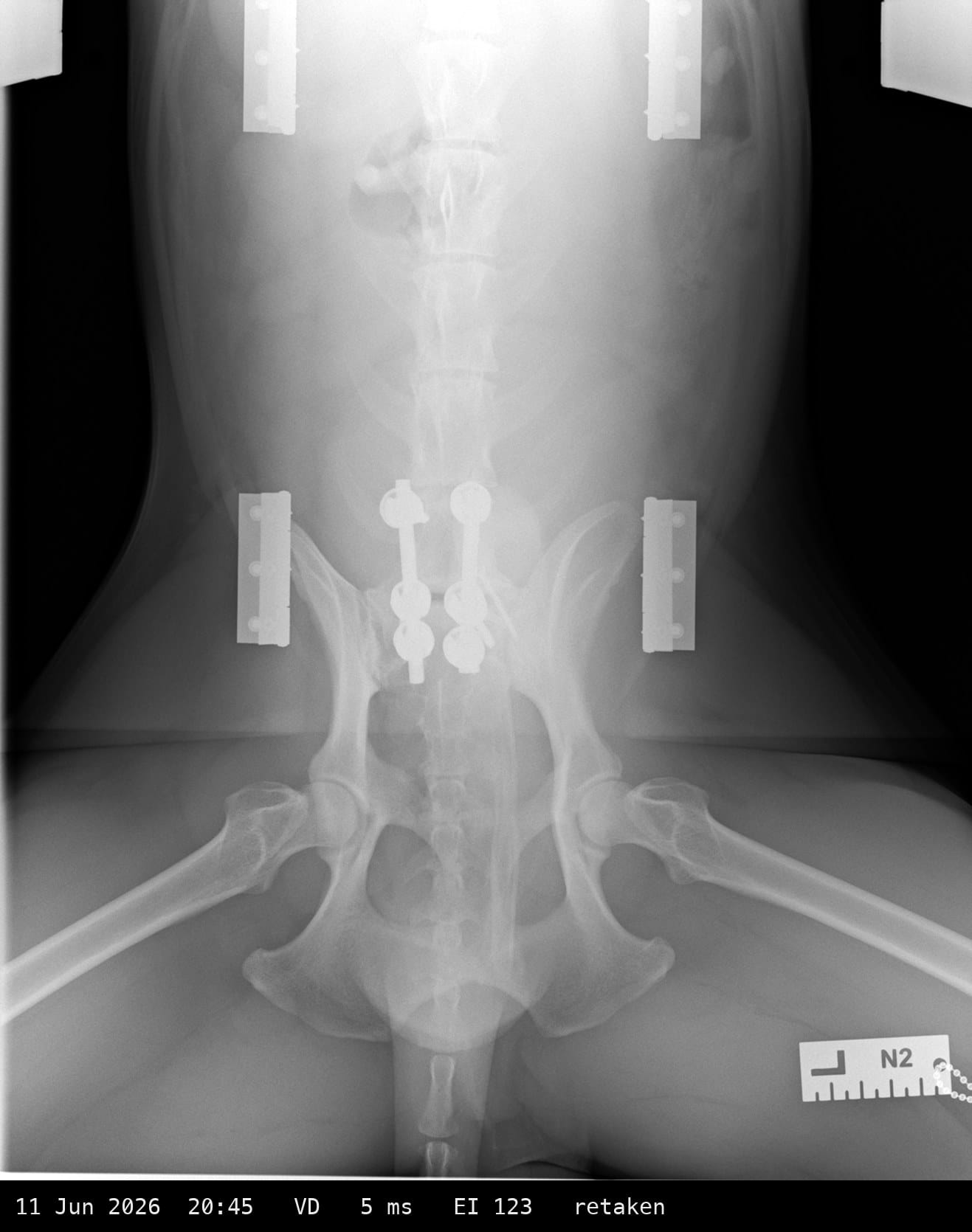
You asked why Amos remained positioned for postoperative radiography and why several ventrodorsal images were obtained. The radiographic timestamps show that Amos was not maintained in one unchanged position for 22 minutes. Six postoperative radiographs were obtained in total, beginning with a lateral image at 20:22. Ventrodorsal images were then obtained at 20:35, 20:36 and 20:45 using a pelvic positioner, after which his position was changed again. The available images suggest that the earlier views were repeated to obtain radiographs of adequate diagnostic quality. In particular, the pelvic positioner appears to have affected the quality of the initial images and was removed before the improved final views were obtained. Repositioning an anaesthetised patient to obtain adequate postoperative images and confirm satisfactory implant placement would not, in itself, be considered inappropriate.
You also asked why a second pack of trazodone was recorded as dispensed at 21:17 on 11 June. Pride cannot now establish definitively why a second dispensing entry was made. The clinical team was aware that Amos could become particularly anxious in the hospital environment and had planned to manage this proactively during his postoperative recovery. It appears that trazodone may initially have been dispensed in anticipation of this need and then dispensed again as part of his routine postoperative prescriptions without it being recognised that a supply had already been prepared. If so, this represented a duplication in dispensing, for which Pride apologises. However, a duplicated dispensing record does not establish that Amos received a duplicated dose.
Finally, you asked about the interval between the CT and MRI studies on 18 June. The entry stating “wait for imagers to confirm move to MRI” indicates that the team awaited confirmation from the imaging service before transferring Amos for the next study. This may occur while the acquired images are checked and the clinicians confirm whether the study is complete or whether any additional images are required. The fact that the report relating to the earlier CT was finalised at the same time as the MRI commenced does not indicate that the MRI was delayed while that report was completed. Drafting and approval of a diagnostic-imaging report takes place separately from the team undertaking the current CT and MRI examinations. There was no clinical or operational requirement for the earlier report to be finalised before the MRI could begin, and the matching timestamps appear to have been coincidental.
These further questions do not alter the conclusions of my review regarding Amos’s discharge, the advice provided after discharge or the subsequent diagnosis of discospondylitis.
Thank you for the considerable time and care you have taken to set out your concerns, and for giving me the opportunity to review Amos’s care and respond. I appreciate that my conclusions may not be the outcome you had hoped for. If you continue to consider that the care provided to Amos was negligent and that this directly resulted in financial loss, please explain the clinical basis on which you reach that conclusion and provide an itemised schedule of the losses you attribute to the alleged negligence, together with the relevant invoices or other supporting documentation. We will then refer this information to our professional indemnity insurers for their consideration.
I also note your offer to provide a summary of your observations and experiences following Amos’s three discharges. We would welcome this feedback and will give it due consideration. First-hand observations from clients can provide valuable insight into the transition from hospital to home, and we remain committed to learning from feedback and identifying opportunities to improve the care and service provided.
I acknowledge that you have indicated your intention to refer aspects of your concerns to the Royal College of Veterinary Surgeons, the Veterinary Client Mediation Service and the Information Commissioner’s Office, and that you may consider legal proceedings. Pride Veterinary Referrals and the wider IVC Evidensia organisation will cooperate as required with any appropriate third party should you decide to pursue these routes. This response concludes IVC Evidensia’s internal complaints process in relation to the matters raised, and we will therefore have nothing further to add to our substantive response.
Finally, I recognise how difficult and upsetting this period has been for you and Amos. Your correspondence demonstrates the considerable care, attention and dedication you have given to monitoring his condition and advocating for him throughout a complex and uncertain recovery. I sincerely hope that Amos responds favourably to his continuing treatment, and I wish you both the very best.
Yours sincerely
[name redacted] Clinical Consultant, IVC Evidensia